Prototyping, Design, and Drafting
Advanced Precision Machining’s (APM) prototyping services, CNC machining design support, and drafting work aren’t three separate offerings you mix and match. They’re a connected workflow that takes your concept, sketch, or partial CAD file and moves it toward a finished, production-ready part. This is for engineers, product developers, and manufacturing managers who need a machining partner that does more than execute drawings. With APM, you get a partner who will review your design, flag problems before cutting begins, and help you get it right the first time.
From Sketch or CAD File to a Finished, Machinable Part
Most customers don’t arrive with a perfect print. We work from hand sketches, rough measurements, incomplete CAD files, photos of worn or broken parts, or a verbal description of what a component needs to do. Whatever you have, we can work with it.
Once we understand the part and its application, we convert that input into a manufacturing-ready drawing: proper tolerancing, GD&T callouts, material specifications, and surface finish requirements, everything a machinist needs to cut the part correctly. From there, we machine a functional prototype, check it against the drawing, and iterate with you until the design is confirmed. When you’re ready to move into production, the documentation and process knowledge are already in place.
This isn’t a digital quoting platform. You aren’t uploading a file and waiting for an algorithm to spit back a price. You’re talking directly to experienced machinists who will look at your geometry, ask the right questions, and tell you honestly what we see. Our CAD/CAM workflow and digital tooling utilities support the full path from design file to finished part. Send us your sketch or CAD file and we’ll take a look.
The Problem with Designs That Look Right on Paper
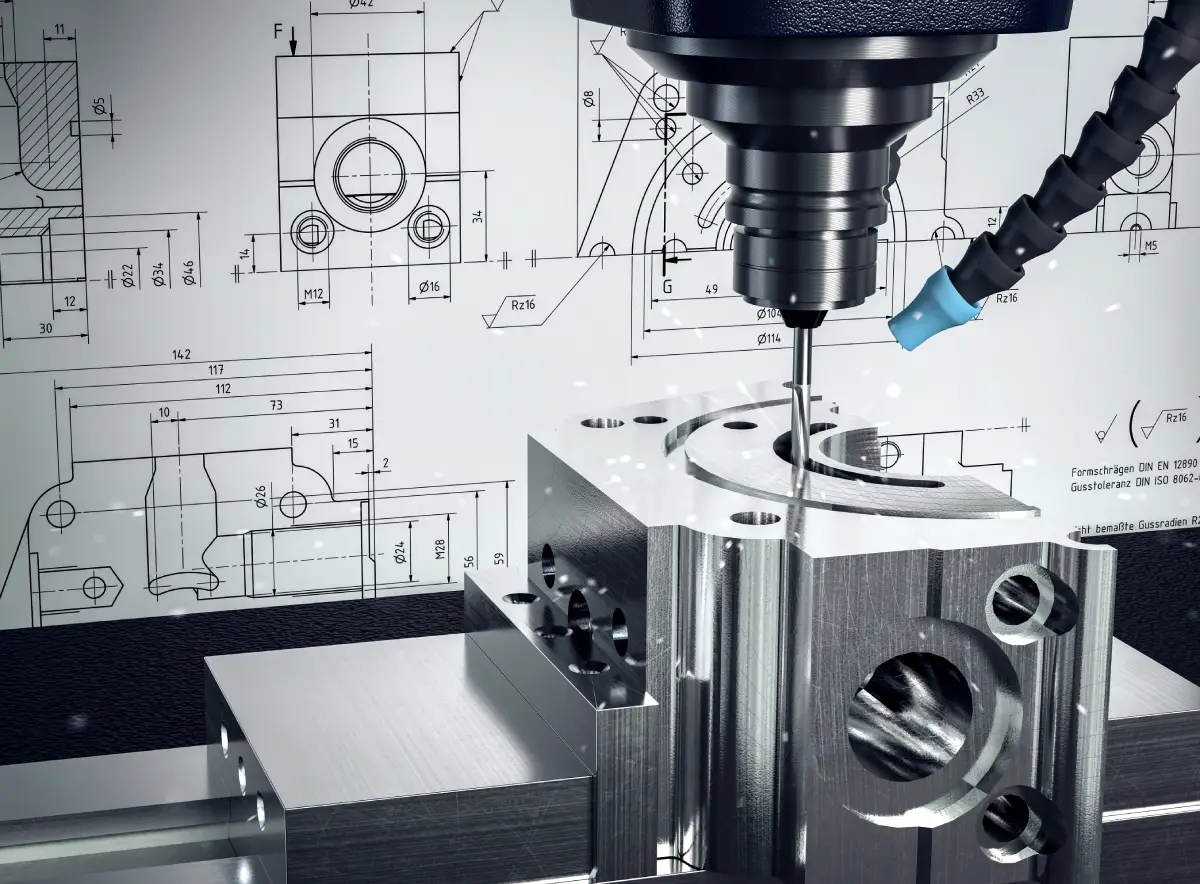
A drawing can be geometrically correct and still be expensive or difficult to machine. This happens more often than engineers expect, and the cost shows up later: scrapped material, rework, or a part that meets the drawing but doesn’t perform in the assembly.
Some of the most common problems we see:
- Over-tight tolerances: Tighter than the application actually requires, adding machining time and cost without adding function.
- Feature geometry that forces multiple setups: If the part can’t be held in one orientation, you pay for every extra setup.
- Material choices not evaluated against machining behavior: A material that looks right on paper may machine slowly, wear tooling faster, or hold tolerances poorly.
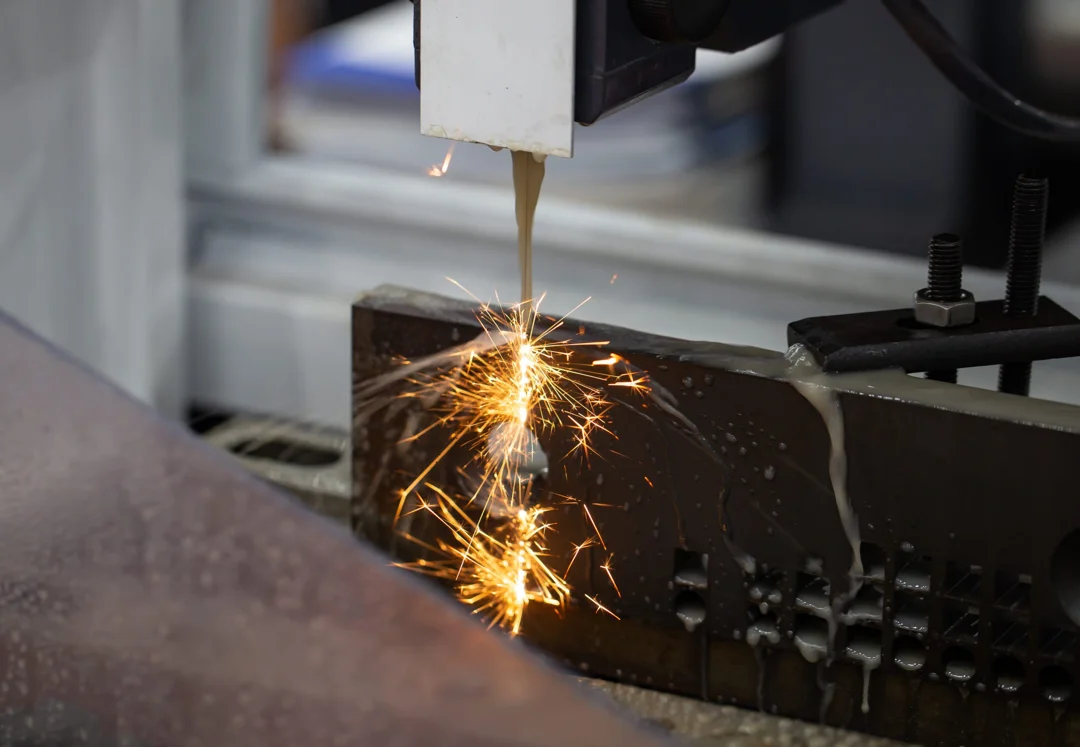
- Sharp internal corners: No standard end mill can cut a truly sharp internal corner. Specifying them creates rework or requires Wire EDM operations that weren’t budgeted.
Online quoting platforms will accept a drawing like that, price it, and send it to the floor. They don’t flag those issues because their process isn’t set up to. We won’t cut a part we know will come back with problems. If your design has something that will cause trouble, we’ll tell you before we touch the material.
Our Approach, Engineering Partnership Before the First Cut
At Advanced Precision Machining, we’ve been doing this for over 30 years, and one of the things we hear most often from engineers is not “here is my drawing, give me a price.” It’s “can you machine this part easier?” and “how do we get this tolerance as inexpensive as possible?” That’s the conversation we’re built for.
Before the milling and machining process begins, we review the design with a machinist’s eye. Our CNC design services feed directly into this review, so the feedback you get is grounded in how we would actually cut the part, not theoretical engineering guidance. That review covers:
- Geometry simplification: Can any features be consolidated or adjusted without affecting function?
- Tolerance calibration: Are callouts matched to what the part actually needs to do, or carried over from a template?
- Material selection: Does the chosen material machine well, and is it the most cost-effective option for the application?
- Setup sequencing: We think through how the part will be fixtured and programmed before a single line of G-code is written.
Cutting corners is never worth it. We would rather do it right the first time and build relationships that last. For prototype machining, that means we won’t rush a design into production if we see something that will cause a problem downstream. We’ll flag it, explain what we would change and why, and let you decide how to proceed.
Ready to talk through your prototype project? Contact APM to speak with a CNC machinist who will review your design and give you honest feedback.
Design for Manufacturability (DFM) Guidance
DFM in practice means reviewing your design against the realities of how a CNC machine actually cuts material. We look at whether tolerances are calibrated to function or just copied from a standard template. We identify features that will require an extra setup because a tool can’t reach them in the primary orientation. We suggest geometry adjustments that preserve your design intent but machine faster, cleaner, and with less risk of scrap.
This review is part of our prototype workflow. It’s not a consulting engagement you pay for separately. Customers often come to us with a working design that gets them a functional prototype, and we’ll note where small changes would reduce per-unit cost significantly when they move to a production run. Those changes are worth catching at the prototype stage, not after tooling decisions have been made.
Every prototype we machine goes throughinspection and dimensional verification before it leaves the shop, so you know whether the part matches the drawing, not just whether it looks right.
Sketch-to-CAD and Drafting Support
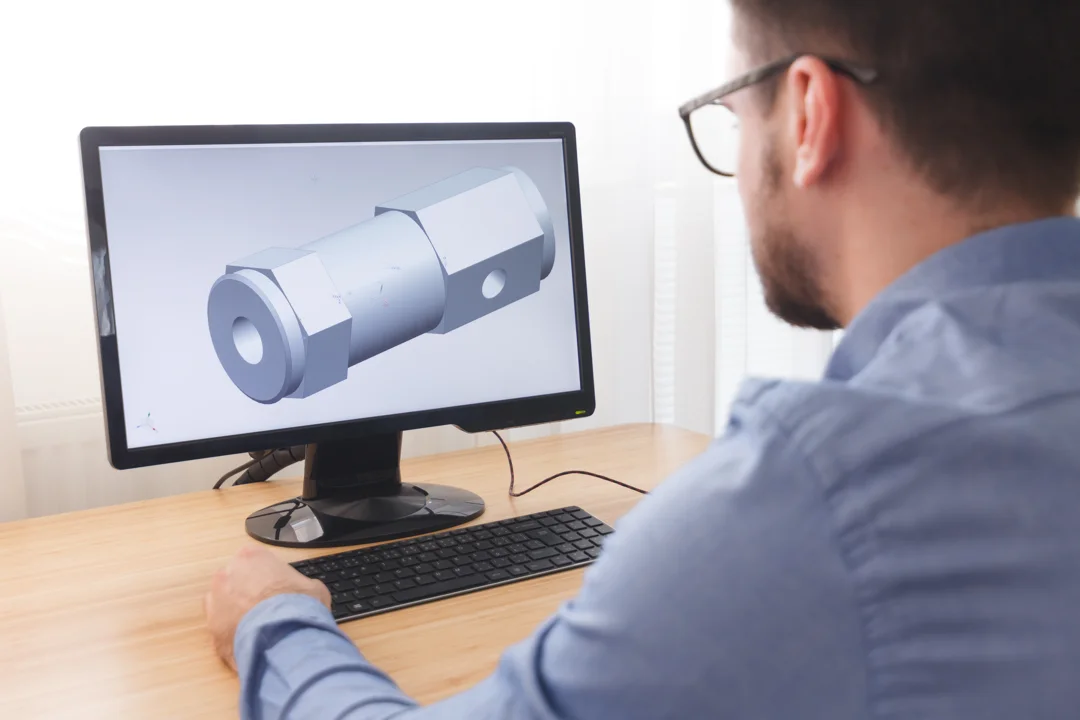
Not everyone starts with a finished CAD file, and that’s fine. We regularly work from hand sketches, rough dimensions scribbled on paper, photos of existing parts, or a description of what the component needs to accomplish. If you can tell us what it needs to do and give us the key dimensions, we can turn that into a machinable drawing.
The output is a manufacturing drawing with proper tolerancing, GD&T callouts, and material specifications, the kind of documentation a machinist can work from directly. For worn or broken parts with no existing drawing, we can reverse-engineer the geometry from the physical part and create a drawing from scratch.
CNC prototyping often starts exactly here, before there’s a CAD model at all. Customers in agricultural equipment repair, food manufacturing, and industrial maintenance regularly walk in with a broken component and no drawing. We make the part from what they bring us.
Key Benefits of Machine Shop Prototyping at APM
Here is what working with APM on machine shop prototyping gets you in practice:
- Design problems caught before cutting begins: Our review process identifies tolerance, geometry, and material issues before material is touched, which means less scrap and fewer costly design revisions.
- Direct feedback from the machinist who cuts your part: You aren’t dealing with an automated quoting algorithm. The person reviewing your design is the same person (or team) who programs and machines it.
- A clear path from prototype to production run without switching vendors: The same shop that machines your prototype can take you into production, with no re-qualification, no process documentation gaps, and no learning curve on your part geometry.
- Walk-in and rush capability for urgent work: We’re one of the few machine shops that accepts walk-in customers and accommodates rush requests. A food manufacturer called Monday morning for rush components with different specifications, and we delivered them Wednesday morning. Turnaround depends on complexity and current shop capacity; call us to discuss your timeline.
- ISO 9001-certified quality management and ITAR registration: For aerospace, defense, and medical customers, those credentials matter at the prototype stage, not just in production. Our quality system and compliance registrations apply to every project we take on.
Industries We Support with Prototype Machining and Design
We work across a wide range of industries, and the prototype and design challenges each one brings are genuinely different. Being a rapid prototyping machine shop that handles both the design review and the machining under one roof means we can speak to those industry-specific requirements from experience.
- Aerospace and satellite systems: Tolerances are tight, material certifications matter, and there’s no acceptable margin for a part that almost fits. We currently have satellite components in space, which gives you a reasonable sense of the precision level we work at. See our Guide to Aerospace Machining for more detail.
- Medical devices and scientific instrumentation: First-article inspection, material traceability, and documentation requirements apply from the prototype stage. We build that into the process, not as an add-on. See our Guide to Medical CNC Machining to learn more.
- Optics and photonics: Optical mounts, lens housings, and mirror mounts require tight tolerances and careful attention to surface finish and material behavior. Our work with Colorado-based scientific instrumentation customers gives us direct experience with these requirements. Our Optics Machining Guide explains more.
- Oil and gas, automotive, and industrial equipment: Prototype and replacement part work here often involves existing equipment with no drawing on file. Reverse engineering and fast turnaround matter as much as precision. See our Oil & Gas Industry Machining Guide for more detail.
- Food manufacturing and agricultural: When production equipment goes down, the cost of delay can be significant. Rush prototype and replacement part requests from these customers are something we handle regularly, and we take them seriously.

What to Expect, From First Contact to Finished Prototype
Here is how the process works, from your side of it, when you bring a prototype project to APM. Our CNC prototyping services follow this sequence on every project.
- Contact us with what you have: That might be a CAD file, a sketch, a broken part, or a description of what you need. You can walk in, call at 303-776-1910, or send files by email. We don’t require a finished print to start the conversation.
- Design review and DFM feedback before the quote is finalized: We look at the geometry, tolerances, and material, ask clarifying questions, and flag anything we would recommend changing before cutting begins. This step is what separates a shop that reviews your design from one that just prices it.
- Quote based on the reviewed design: Once we understand the part and have addressed any design questions, we give you a quote grounded in how we would actually machine it.
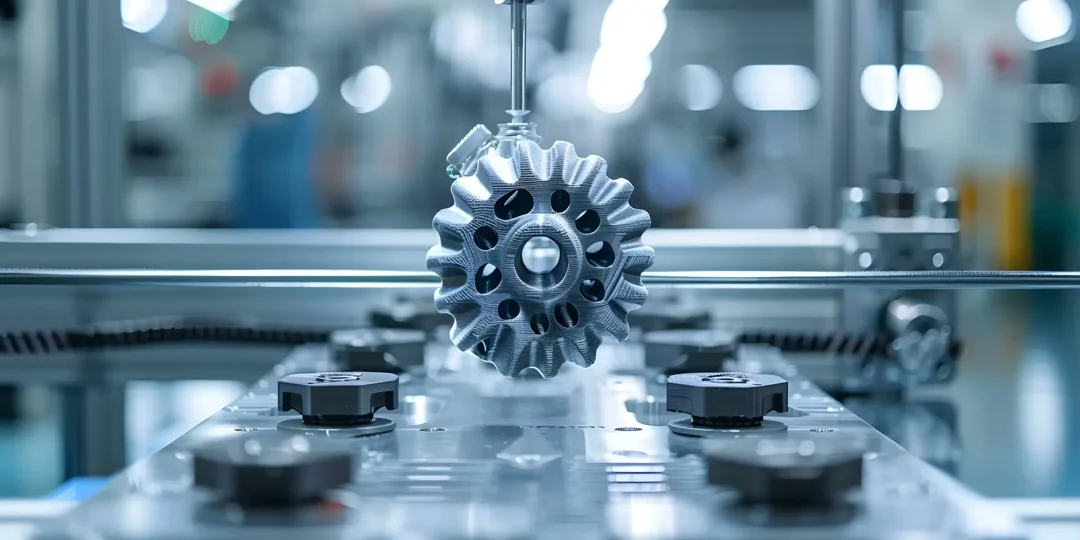
- Machining the prototype: We machine your part using CNC milling, CNC turning, or other applicable processes depending on part geometry. In some cases, 3D printing plays a role in rapid concept verification before committing to a machined prototype.
- Dimensional inspection before the part ships: We verify the part against the drawing using our in-house inspection reporting and metrology equipment before it leaves the shop.
- Iterate or move to production: If the prototype needs adjustments, we work through revisions with you. When the design is confirmed, the same team and documentation support your production run, with no handoff to a new supplier.
Capabilities That Support Every Stage of Prototype Manufacturing
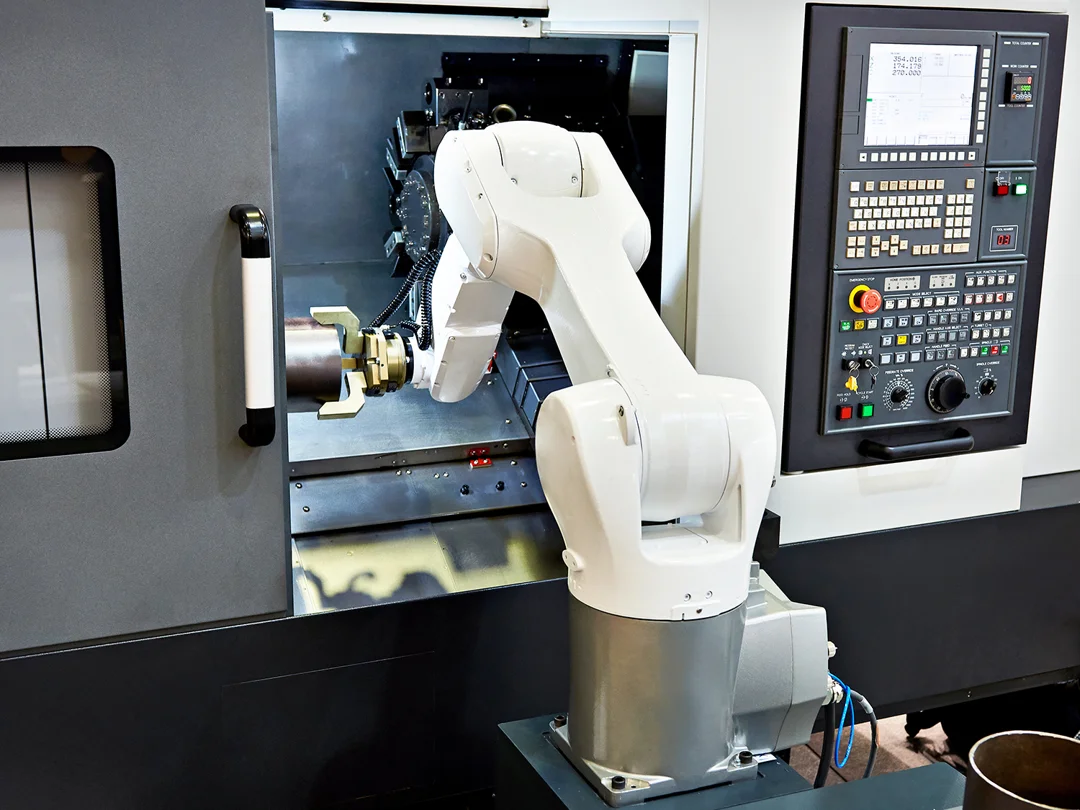
Prototype manufacturing at APM doesn’t require outside vendors. Every process we use is in-house in Longmont, Colorado, which keeps lead times tighter and communication cleaner. Our full range of precision machining services includes CNC milling (including 4-axis and 5-axis), CNC turning, CNC grinding, Wire EDM, 3D printing, robotic welding, laser marking, plating and surface finishing, and in-house inspection with Zeiss Spectrum II CMM and Mitutoyo metrology instruments.
From a raw drawing to a finished, inspected part, everything happens under one roof.
From Prototype to Production, Without Switching Vendors
When prototyping and production happen at different shops, there’s a real cost:
- Lost process knowledge: The production shop doesn’t know your part the way the prototype shop did.
- Documentation rebuild: Process documentation has to be recreated from scratch.
- Tolerance drift. Tolerances held one way on the prototype may shift slightly under different fixturing.
- Lead time reset: The new shop needs time to come up to speed on your geometry before production can begin.
None of that happens when you work with Advanced Precision Machining.
The machinists who cut your prototype already understand the part: where the tight tolerances are, how it needs to be held, what the application requires. When you’re ready to move to a production run, we’re already past the learning curve.
That continuity shows in our retention numbers. We have customers who have worked with us for over 20 years, and some who brought APM with them when they changed employers. A shop that only executes drawings doesn’t build that kind of record.
Talk to a Machinist About Your Next Prototype Project
Advanced Precision Machining
1131 Delaware Ave. #3
Longmont, CO 80501
Phone: 303-776-1910
APM is ISO 9001 certified and ITAR registered, meeting the quality management and compliance requirements for aerospace, defense, and medical prototype work.
Have Questions?
We would be happy to answer them. Please fill out the form below and we will reply promptly. (All items are required.)
Frequently Asked Questions About APM’s Prototyping, Design, and Drafting Services
- Can you machine a prototype from a hand sketch or incomplete drawing?
- What is design for manufacturability, and why does it matter for prototypes?
- How quickly can APM turn around a prototype?
- Can you handle both the prototype and the production run?
- What materials can you prototype in?
- Do you work with customers outside of Colorado?
- Is APM certified for aerospace, defense, or medical prototype work?
Yes. We work from hand sketches, rough measurements, photos, broken parts with no existing print, and verbal descriptions of what a part needs to do. We’ll ask clarifying questions, develop a manufacturing drawing, and confirm the design with you before cutting begins. A finished CAD file is helpful but not required to start the process.
DFM is the practice of reviewing a design against the realities of how it will actually be machined, before material is cut. For a prototype, this means looking at whether tolerances are tighter than the application requires, whether any features will need extra setups, and whether small geometry changes could make the part faster and cheaper to produce. Catching those issues at the prototype stage saves money at both the prototype and production run levels. It’s something we do as part of our standard process, not as a separate service.
It depends on complexity, material, and current shop capacity, and we won’t promise a specific lead time without knowing your part. What we can tell you is that we take rapid prototyping seriously. A food manufacturer called us Monday morning with a rush order for components with modified specifications. We delivered them Wednesday morning. That’s an example of how we respond when urgency matters, not a blanket guarantee. Call us at 303-776-1910 or send your design to discuss current availability.
Yes. Moving from prototype to production within the same shop is one of the clearest advantages we offer. The team that machines your prototype already understands the part geometry, tolerance requirements, and application context. When production begins, there’s no re-qualification process, no documentation rebuild, and no lead time reset while a new shop learns your part. Prototype machining and production runs are part of the same workflow here.
We work with a broad range of metals and engineering materials. Common choices include aluminum alloys, stainless steel, tool steel, titanium, brass, copper, and various plastics. The right material depends on your application requirements, and our design review includes a look at whether your chosen material is the best fit for both function and machinability. If you’re undecided, we can help you evaluate options before cutting begins.
Yes. We’re based in Longmont, Colorado, and serve engineers and manufacturers across the Front Range locally, and nationally for customers who ship parts. Many of our long-term customers aren’t local. If you’re outside the area, you can send drawings or CAD files by email, we’ll handle the design review and machining, and ship finished parts directly to you. Call us at 303-776-1910 to discuss your project and shipping requirements.
Yes. APM is ISO 9001 certified and ITAR registered. Those credentials apply to every project we take on, including prototypes. For aerospace, defense, and medical customers, that means the quality management system, documentation practices, and compliance requirements are already in place from the first part, not introduced later in the production phase.