
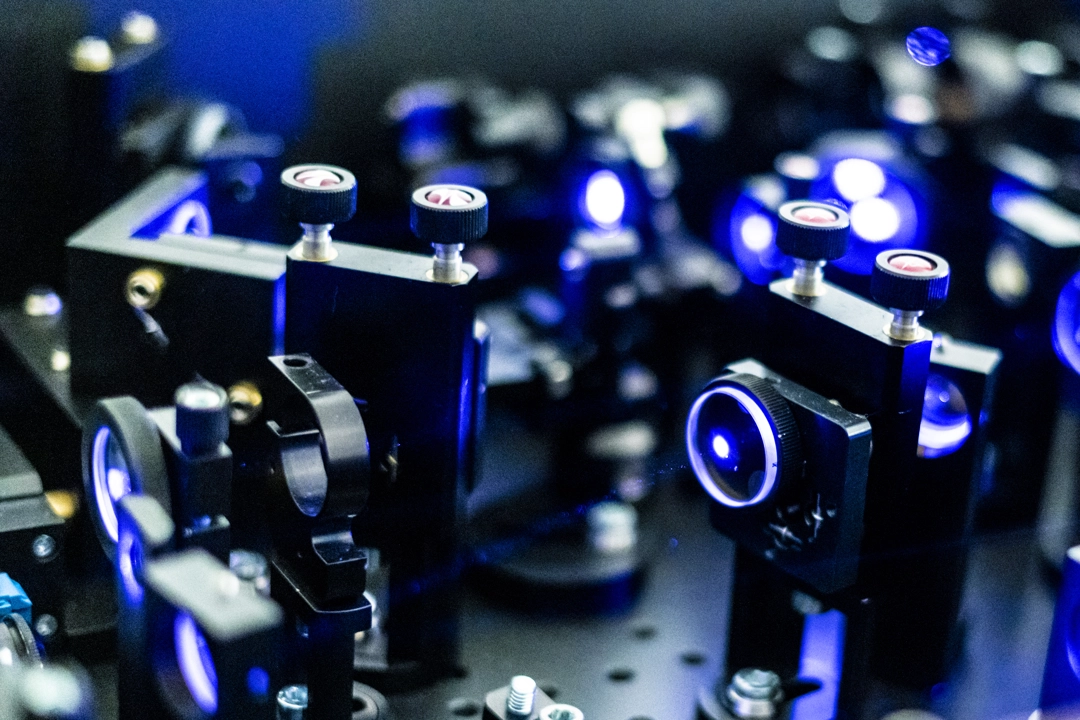
Colorado’s Front Range is home to a formally recognized optics and photonics manufacturing cluster. The Colorado Photonics Industry Association (CPIA) is recognized by the IEEE Photonics Society as one of only a handful of named U.S. optics industry clusters.
For engineers and buyers at Front Range companies who need precision-machined mechanical components to support optical systems, that recognition matters, and so does knowing which local machining partners actually understand the work. At Advanced Precision Machining (APM), we’re based in Longmont, and this is the industry context we work in every day.
Colorado’s Optics and Photonics Cluster Is Formally Recognized, Not Just a Talking Point
The CPIA’s standing as an IEEE Photonics Society-named industry cluster puts Colorado in rare company nationally. A 2021 industry initiative described the region as home to hundreds of technology and optics-related businesses across northwest metro Denver, the Boulder Valley, and northern Colorado. That’s a meaningful density of companies, and it shows decades of sustained investment in research, talent, and commercial activity.
The anchor institutions are well known to anyone working in this space. NIST Boulder operates two divisions with direct optics and photonics relevance: the Time and Frequency Division and the Quantum Physics Division. JILA, the joint institute between CU Boulder and NIST, has been running foundational research in atomic, molecular, and optical physics since 1962. These federal and university programs don’t just produce research. They generate sustained local demand for precision hardware.
The commercial side of Colorado optics manufacturing is just as concentrated. Alpine Research Optics in Boulder produces high-damage laser optics and precision mirrors. KMLabs, also in Boulder, develops ultrafast laser systems and extreme-ultraviolet light sources. Vescent, based in Golden, makes laser control systems and frequency-control products for quantum technology. The cluster around these companies includes suppliers, integrators, and the machine shops that produce the mechanical components their instruments require. Colorado’s optics sector is an established one.
The Research Institutions Driving Optics and Photonics Demand in Colorado
NIST Boulder’s Contributions
NIST Boulder’s Time and Frequency Division is responsible for some of the most precise timekeeping systems in the world, including atomic clocks and frequency standards that underpin GPS and communications infrastructure. The Quantum Physics Division focuses on laser cooling, atom traps, and quantum information systems. Both divisions operate experimental setups that require tightly toleranced mechanical hardware: precision housings, vacuum-compatible assemblies, optical mounts, and alignment fixtures built to exacting specifications.
JILA’s Foundational Research
JILA’s research spans atomic, molecular, and optical physics, as well as quantum information science. The experimental apparatus that JILA researchers work with is physically demanding to build. Mounts need to hold alignment under thermal cycling. Vacuum chambers require precise bore tolerances. Structural components for optical benches need to maintain rigidity across temperature ranges. That hardware doesn’t come off a shelf. It gets machined.
CU Boulder’s Talent Pipeline
CU Boulder also feeds engineering talent into the region continuously. Graduates from the mechanical and aerospace engineering programs at CU go to work at NIST, JILA, and the commercial photonics companies nearby. Many of them already understand precision manufacturing expectations before they start specifying parts. That shared technical baseline makes collaboration between Front Range engineers and local machine shops more productive from the first conversation.
Elevate Quantum: Federal Investment Is Expanding the Market for Optics Machining Production
In July 2024, the U.S. Department of Commerce announced approximately $41 million in implementation funding for the Elevate Quantum consortium, designating it as a regional technology hub spanning Colorado and New Mexico. This is a significant injection into the regional quantum technology supply chain, covering commercialization infrastructure, workforce development, and supplier readiness.
The Colorado CNC milling and machining implications are direct. Quantum technology hardware, including atom traps, frequency-control systems, cryogenic assemblies, and optical tables, requires the same class of tight-tolerance mechanical components as conventional photonics work. These aren’t simple parts. Cryogenic assemblies need materials and tolerances that account for dimensional changes at low temperature. Atom trap hardware involves vacuum-compatible components with surface finish requirements that affect outgassing.
What this funding signals, from a production standpoint, is multi-year demand growth for local suppliers who can support low-volume prototype work and small production runs in these sectors. Companies commercializing quantum technology don’t order thousands of parts at a time. They need a local machine shop that takes five-piece orders seriously, turns them around quickly, and gets the dimensions right the first time. For optics machining production in Colorado, that demand is growing, and the qualified local supply chain needs to grow with it.
What the Colorado Optics Ecosystem Actually Needs from a Machine Shop
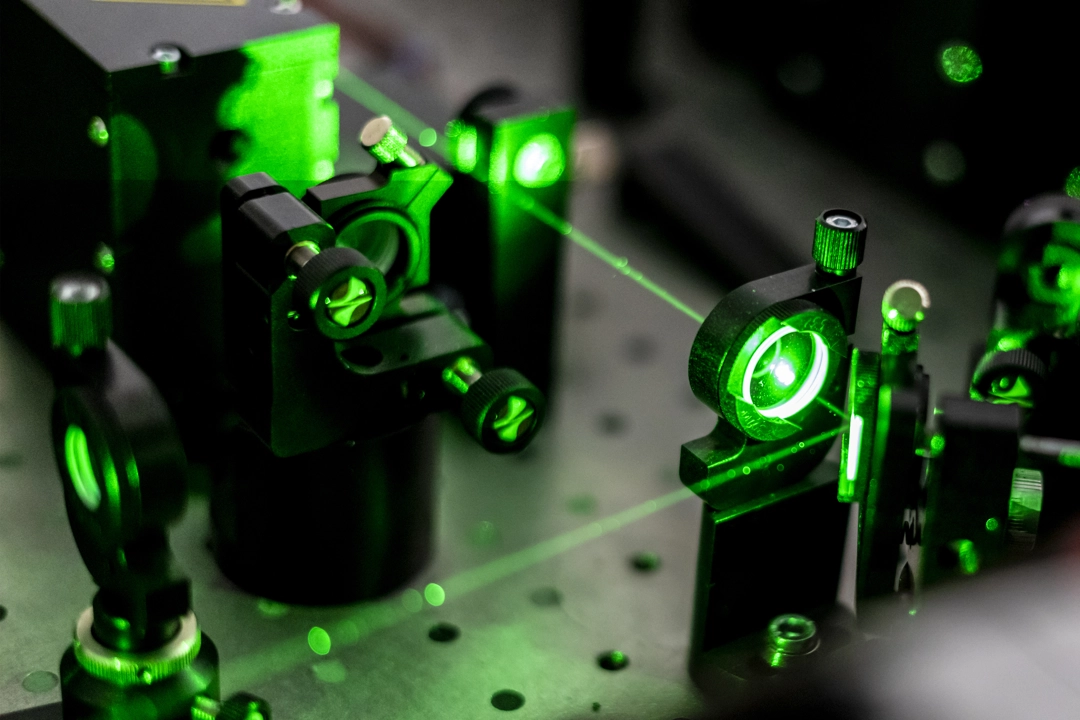
Here is the distinction that matters: optics and photonics companies in Colorado need precision-machined mechanical components, not lens grinding or optical element fabrication. Advanced Precision Machining machines the hardware that holds, positions, and protects optical elements. We don’t grind lenses or polish mirrors. That difference is worth stating plainly, because it defines what the right machining partner actually does.
The component types these companies need include:
- Optical housings: enclosures and barrels that hold lens assemblies in fixed alignment
- Lens mounts and mirror mounts: kinematic and rigid mounting hardware for optical elements
- Lens cells: cylindrical precision bores that seat and retain lenses
- Alignment fixtures: tooling and reference structures used during optical assembly
- Retaining rings and brackets: secondary hardware that locks assemblies in position
- Vacuum-compatible assemblies: components machined and finished to meet outgassing and surface cleanliness requirements
- Structural supports for optical benches: precision-bored and dimensionally stable base components

What makes these parts demanding isn’t complexity for its own sake. It’s the combination of tight tolerances, surface finish requirements that directly affect alignment performance, and materials that include aluminum, stainless steel, and titanium, often in small batches with little room to learn from a first-article failure. A housing that seats a lens even fractionally off-axis will affect the optical performance of the entire system. That’s what a machinist needs to understand before making the first cut.
Tolerances and Surface Finish Matter More Than Most Shops Realize
In optical assemblies, misalignment at the housing or mount level propagates directly into system performance. A CNC machinist who treats an optical housing like a standard enclosure, executing the drawing without thinking about its function, creates problems downstream that are expensive to diagnose and fix.
Advanced Precision Machining regularly works through tolerance questions with engineers before CNC machining begins. Engineers call asking for a better way to machine a feature, or asking how to hit a required tolerance at lower cost. These are real questions our Colorado machine shop fields daily: “Can you machine this easier?” and “How do we get this tolerance as inexpensive as possible?” These questions don’t get asked at a shop that just runs the program and ships the part. They get asked when the engineer trusts the CNC machinists who understand what the part actually does.
Small Batches and Prototype Iterations Are the Norm in Photonics
Photonics and quantum technology development doesn’t follow a mass production workflow. Engineers build a prototype housing, test the optical alignment, find that one bore is holding the lens at a slight angle, and need a revised part in days, not weeks. That iteration cycle is normal, and it requires a machining partner who can accommodate it without treating a three-piece revised order as a low-priority job.
APM handles walk-in and urgent work as a documented part of how we operate. One of the things that sets us apart is that we provide a service that many machine shops do not. We work with walk-in customers and urgent requests. For a photonics engineer who just identified a design issue and needs a revised fixture by the end of the week, that responsiveness isn’t a nice-to-have. It’s the difference between a project staying on schedule and a significant slip.
Why Location Inside the Front Range Corridor Matters for CNC Machining for Optics Industry Clients
APM is in Longmont, which puts us between Boulder to the south and Fort Collins to the north. Boulder is where NIST Boulder, JILA, CU Boulder, Alpine Research Optics, KMLabs, and Vescent are all located. The communities of Broomfield, Louisville, and Lafayette are a short drive south. The Denver metro is accessible without crossing a major geographic barrier. For an engineer at any of these locations, getting to APM for a part discussion or a first-article inspection isn’t a half-day event.
That proximity has real operational value. When a prototype housing comes back and the engineer wants to stand at the machine and talk through a geometry change, being 20 to 30 minutes away makes that conversation happen. When a revised part needs same-day turnaround, local delivery is feasible. When a project hits a manufacturing issue mid-run and needs an immediate decision on a tolerance trade-off, a local shop can respond in hours rather than coordinating across time zones.
CNC machining for optics industry clients frequently involves this kind of real-time problem-solving. Sourcing precision optics hardware from outside the region adds shipping time and communication friction at exactly the points in a project when speed matters most. For Front Range engineers managing tight timelines, a machining partner located inside the corridor is a practical advantage, not just a preference.
APM’s Experience with Optics-Adjacent Machining Work
We have been doing this kind of work since we were founded in 2005. APM is ISO 9001 certified and ITAR registered, and our client history includes companies working at the intersection of precision machining and optical systems. SPEC Inc., a Boulder-based cloud physics and instrumentation company, has trusted us with their machining needs. DFM Engineering, a Longmont firm that designs and manufactures telescopes, is another documented client. Both relationships involve exactly the kind of tight-tolerance work that scientific instrument and optical system development requires.
APM’s role in these relationships is defined clearly with the goal to be a knowledge partner, in addition to a precision manufacturing partner for our clients invested in scientific research. A client bringing us a telescope component or a scientific instrument housing isn’t just buying machining time. They’re working with a machine shop that understands why the dimensions matter and what happens when they don’t.
For dimensional verification, we operate a Zeiss Spectrum II coordinate measuring machine (CMM). When photonics and scientific instrumentation customers need inspection reports with their parts, we can provide that documentation. Many customers in this sector require it as a condition of doing business.
ISO 9001 and ITAR Registration: Why Credentials Matter for Precision Machining for Optics Industry Work
Many optics and photonics customers, particularly those serving defense, aerospace, or space markets, require suppliers with documented quality management systems before they’ll add a shop to their approved vendor list. APM’s ISO 9001 certification establishes that our quality processes are documented, audited, and consistently applied. Our ITAR registration means we can handle defense-related and export-controlled projects without requiring customers to work around compliance barriers.
Customer documentation requirements have increased, requiring more detailed reports and documentation, and we’re able to provide that level of support. That shows a real shift in how photonics and defense-adjacent customers manage their supply chains. Credentials aren’t differentiators for their own sake. They’re prerequisites that determine whether a shop can be considered at all. See how ourinspection and reporting services support those requirements.
Engineering Collaboration Before the First Cut: A Different Kind of Machine Shop
In July 2024, the U.S. Department of Commerce announced approximately $41 million in implementation funding for the Elevate Quantum consortium, designating it as a regional technology hub spanning Colorado and New Mexico. This is a significant injection into the regional quantum technology supply chain, covering commercialization infrastructure, workforce development, and supplier readiness.
The Colorado CNC milling and machining implications are direct. Quantum technology hardware, including atom traps, frequency-control systems, cryogenic assemblies, and optical tables, requires the same class of tight-tolerance mechanical components as conventional photonics work. These aren’t simple parts. Cryogenic assemblies need materials and tolerances that account for dimensional changes at low temperature. Atom trap hardware involves vacuum-compatible components with surface finish requirements that affect outgassing.
What this funding signals, from a production standpoint, is multi-year demand growth for local suppliers who can support low-volume prototype work and small production runs in these sectors. Companies commercializing quantum technology don’t order thousands of parts at a time. They need a local machine shop that takes five-piece orders seriously, turns them around quickly, and gets the dimensions right the first time. For optics machining production in Colorado, that demand is growing, and the qualified local supply chain needs to grow with it.
What Colorado Optics and Photonics Engineers Should Look for in a Machining Partner
When you’re evaluating a machine shop for optics work, the criteria are more specific than general CNC capability. Here is what matters for this type of work, based on what we know from the projects we have taken on and the engineers we have worked with.
- Documented experience with optics-adjacent components: A shop that has machined telescope hardware, scientific instrument housings, and satellite components understands the functional context of tight-tolerance work. General machining experience doesn’t automatically translate to optics work.
- Willingness to discuss tolerance and manufacturability before quoting: If a shop won’t engage on design questions before you submit a drawing for pricing, that’s a signal. Shops that add value in this space engage early.
- ISO 9001 certification and ITAR registration: For defense, space, and export-controlled photonics work, these aren’t optional. Verify them before investing time in a vendor relationship.
- Inspection and reporting capability: Many photonics and scientific instrumentation customers require dimensional reports with parts. A shop with a CMM and the process to generate traceable inspection documentation is a different category of supplier than one without it.
- Responsiveness for prototype iterations: If a shop can’t accommodate a revised three-piece order on a reasonable timeline, it won’t work for development-phase photonics projects. Ask directly how they handle short-run urgent work.
- Local presence for in-person collaboration: Not every project needs an on-site visit, but having that option when a geometry problem needs a real conversation is worth more than a remote shop with a faster website.
Frequently Asked Questions: CNC Machining for Colorado Optics and Photonics Companies
- Do you machine optical elements like lenses and mirrors?
- Can you handle small prototype runs and revised iterations quickly?
- Are you ISO 9001 certified and ITAR registered?
- Can you provide inspection reports with parts?
- How early in a project should I contact APM?
No. APM machines the mechanical components that hold, position, and protect optical elements. That includes housings, lens cells, mirror mounts, alignment fixtures, and vacuum-compatible assemblies. Lens grinding and mirror polishing are separate specialties we don’t offer.
Yes. Short-run and urgent work is a documented part of how we operate. If you need a revised three-piece order turned around quickly after a design change, that’s a normal request for us, not a low-priority exception.
Yes to both. APM is ISO 9001 certified and ITAR registered. For defense, space, and export-controlled photonics work, those credentials are prerequisites for many vendor approval processes. We can provide documentation on request.
Yes. We operate a Zeiss Spectrum II CMM and can generate traceable dimensional inspection reports. Many photonics and scientific instrumentation customers require this as a condition of doing business, and we’re set up to support it.
Before the drawing is finalized, if possible. APM regularly works through tolerance and manufacturability questions with engineers before machining begins. Catching a tolerance that’s tighter than it needs to be, or a geometry that adds cost without adding function, is much easier before the drawing is locked. Reach out early and we’ll make the conversation useful.
Bring Your Next Optics Machining Project to APM
Advanced Precision Machining’s approach to every project comes back to the same principle: “Cutting corners is never worth it. We would rather do it right the first time and build relationships that last.” That’s not a tagline. It’s how we have kept customers coming back for more than 20 years.
If you’re an engineer or buyer at a Colorado optics or photonics company with a housing, lens mount, mirror mount, alignment fixture, or vacuum-compatible assembly that needs precision machining, we would like to talk about it. Bring us the project early, before the drawing is finalized if possible. We can help you think through the tolerances, the material selection, and the features that will affect both performance and cost.
Start by reading through our optics machining guide for a deeper look at how we approach this work technically. When you’re ready to discuss a specific project, learn more about APM’s background and capabilities or reach out directly to request a quote. We’re in Longmont, we’re familiar with the Front Range optic and photonics community, and we’re ready to talk.
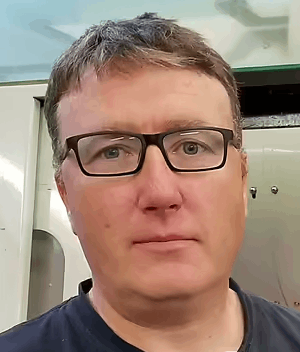
by Gerry Dillon
Gerry Dillon is a co-founder, current owner and certified CNC machinist at Advanced Precision Machining (APM), a full-service machine shop located in Longmont, Colorado. Gerry has over 30 years of precision milling and machining experience under his belt.