The Pressure is On, and So is the Need for Innovation
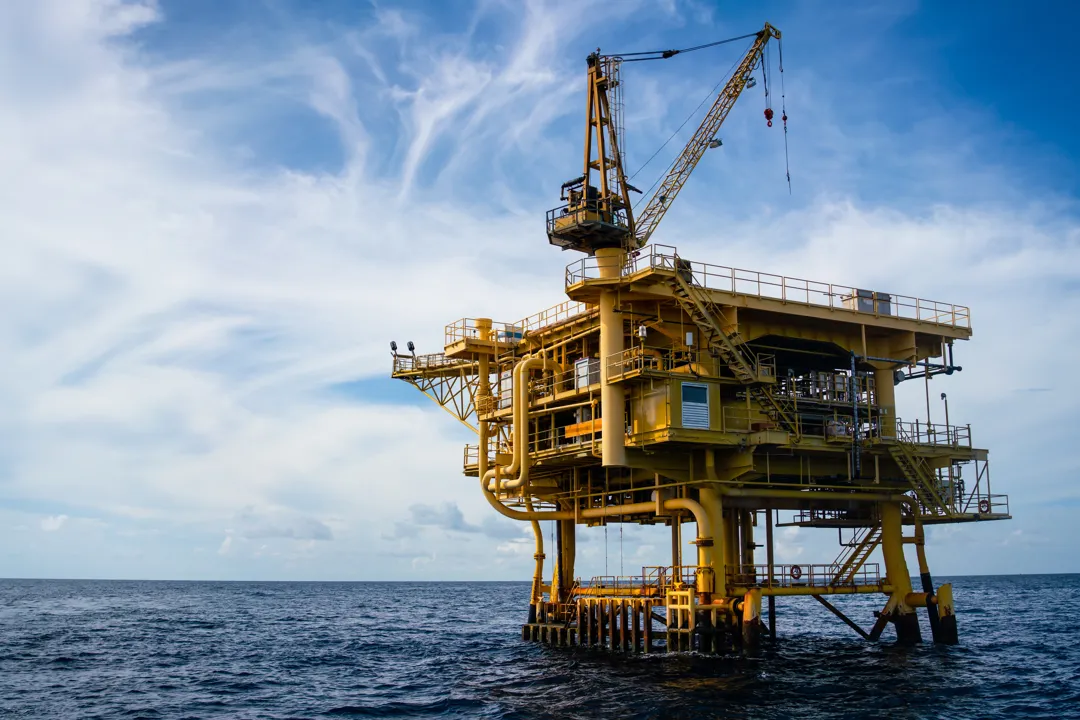
Let’s be honest, the oil and gas industry has never been for the faint of heart. The environments are harsh, the tolerances are razor-thin, and the stakes are incredibly high. From the scorching depths of a downhole well to the corrosive salt spray on an offshore platform, every single component is pushed to its absolute limit. A single failure isn’t just an inconvenience; it can be a multi-million dollar disaster.
For as long as Advanced Precision Machining (APM) has been in this business, success has always come down to the quality and integrity of the machined parts that hold everything together. For decades, the path was clear: start with a solid block of high-grade steel or alloy and meticulously carve it into the perfect shape. It’s a craft of precision, and it has served the industry well.
But the playbook we’ve used for so long is getting a major update. The world is asking for more energy, but it’s also asking for it to be produced more efficiently, more safely, and with a smarter, more sustainable footprint. The old methods, while reliable, are being pushed to their limits. How do you make parts that are stronger yet lighter to handle ever-deeper wells? How do you get a critical, custom-designed component to a remote site in days, not months, to avoid costly downtime?
This is where things get really exciting. Here in Colorado, the future of oil and gas machining is unfolding right now, and it looks a lot different than you might think. We’re not just talking about making chips fly faster; we’re talking about a fundamental shift in machining specialized alloys, and how parts are designed and optimized for the real world.
At APM, we’re right in the thick of this evolution. We see ourselves as more than just an oilfield machine shop; we’re partners in progress, helping our clients solve problems they couldn’t solve ten years ago. So, let’s pull back the curtain and look at the five biggest trends that are completely reshaping the oil and gas machining industry.
If you want to see how we’re already putting these ideas into practice, you can get a great overview of our Colorado oil and gas machining services right here.
Additive Manufacturing (3D Printing): Not Just for Plastic Toys Anymore
When you hear “3D printing”, what comes to mind? For a lot of people, it’s those little desktop machines that make plastic trinkets. And for a while, that was pretty much it. But in our world, that’s ancient history. Today, we’re talking about industrial-scale additive manufacturing—specifically, Direct Metal Laser Sintering (DMLS)—that builds fully dense, incredibly strong parts from high-performance metal powders like Inconel 718, Titanium 6-4, and specialized stainless steels.
What’s the big deal? Well, think about how traditional machining works. It’s a “subtractive” process. You start with a solid block of metal and carve away everything you don’t need. It’s incredibly precise, but you’re limited by where you can physically get a tool. You can’t drill a curved hole, for example.
Additive manufacturing flips that script entirely. Instead of removing material, it builds the part from the ground up, fusing metal powder together layer by microscopic layer. This “additive” approach opens up a universe of possibilities for oil and gas parts.
- Insanely Complex Designs Become Reality: We can now create parts with internal cooling channels, complex lattice structures for weight reduction, and consolidated assemblies that were previously impossible to machine. Imagine a custom flow meter for a unique wellhead configuration. In the past, this might involve machining ten separate pieces and then painstakingly welding them together, creating potential points of failure. Now, we can print it as a single, seamless component with perfectly optimized fluid pathways inside it. The result is a part that’s stronger, lighter, and more reliable.
- No More “Obsolete” Parts: This is a massive advantage for maintaining aging infrastructure. Have a critical piece of equipment from the 90s with a failed part that the original manufacturer no longer supports? It’s a common headache. But if we can create a 3D digital model of that part, we can print a new one on-demand. This capability turns a potential months-long shutdown into a days-long fix.
- The Best of Both Worlds with Hybrid Manufacturing: Here’s the real secret sauce. Additive manufacturing is amazing for creating complex shapes, but CNC milling and machining is still the king of surface finish and tight tolerances. The ultimate solution is often a hybrid approach. We can 3D print a part to its near-net shape—getting all that complex internal geometry just right—and then use our 5-axis CNC machines to finish the critical features: the sealing surfaces, the bearing bores, the precise threads. A lot of people ask, “Is a 3D-printed metal part really as strong as a forged one?” It’s a great question. With today’s technology and post-processing like heat treating, the material properties are incredibly robust, often meeting or exceeding forged standards for specific applications while enabling designs that forging could never achieve.
AI and Machine Learning: The Brains Behind the Operation
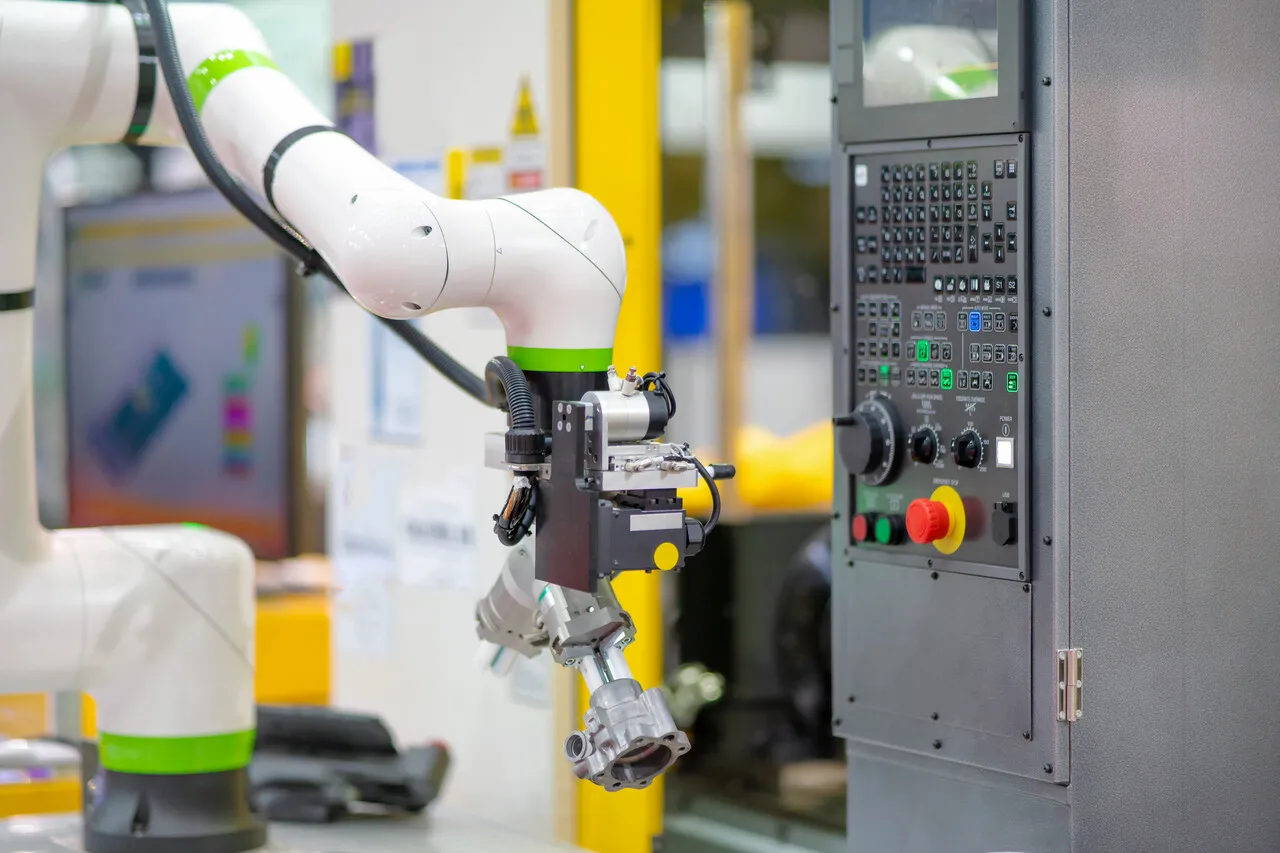
If robotics are the muscle of the modern shop, then Artificial Intelligence (AI) and Machine Learning (ML) are the brain. This is where things start to feel a bit like science fiction, but the applications are very real and incredibly practical for oilfield machining. It’s all about using data to make smarter, more predictive decisions.
Today’s advanced machining technologies result in machines covered in sensors that monitor everything from vibration and temperature to the load on the cutting tool and the flow of coolant. AI algorithms can analyze this flood of data in real-time and do some amazing things:
Predicting the Future with Predictive Maintenance: This is my favorite one. An ML algorithm can learn the unique “heartbeat” of a healthy machine in operation. By spotting tiny, imperceptible changes in that pattern, it can predict a potential failure before it happens. It’s like your car’s check engine light, but instead of just telling you something is wrong, it tells you, “Hey, based on the current wear patterns, the main spindle bearing has an 85% probability of failing in the next 200 hours of runtime.” This allows us to schedule maintenance proactively, preventing the kind of catastrophic, unexpected downtime that kills budgets and timelines.
Smarter Designs with Generative Design: We can now use something called “generative design.” We input the rules and constraints into the software—”This part needs to withstand this much pressure, connect at these points, and weigh as little as possible”—and the AI comes up with hundreds, sometimes thousands, of design options. The results often look organic, with bone-like structures and smooth, flowing curves that a human engineer would never think to draw. But they are perfectly optimized for strength and weight, and often ideal candidates for 3D printing.
The Rise of the “Digital Twin”: This is a truly transformative concept. We can create a “digital twin”—a perfect, physics-based virtual replica—of a part and the entire machining process. Before we cut a single piece of real, expensive metal, we can run hundreds of simulations in this virtual world. We can test different cutting tools, adjust speeds, and predict how the material will react. It’s like having a crystal ball for manufacturing, allowing us to de-risk the process, eliminate errors, and find the absolute most efficient way to make a perfect part on the first try.
Sustainable Machining: Good for the Planet, Great for Business
“Sustainability” can sometimes feel like a corporate buzzword, but in our world, it’s just plain smart business. Being more efficient and eliminating waste in precision machining processes has always been the goal of a great CNC machine shop. Today, we just have better technology and a deeper understanding of how to do it.
Being a leader in oil and gas cnc machining means thinking about our impact. Here’s how it plays out in practical terms:
- Closing the Loop on Material Waste: Machining creates chips—lots of them. What happens to all that leftover metal? It doesn’t go to a landfill. We have a rigorous process for collecting, separating by alloy, and compacting these chips into dense briquettes. This reclaimed material is then sent to be recycled into new raw materials. This “closed-loop” approach is a huge part of responsible manufacturing.
- Smarter Use of Energy and Fluids: Our newer machines are way more energy-efficient, using advanced drives and power-saving modes to reduce our electricity consumption. We’re also moving away from old-school, petroleum-based flood coolants. Modern solutions like high-pressure coolant systems deliver a precise stream of fluid right at the cutting edge, which is more effective and uses far less volume. In some cases, we use Minimum Quantity Lubrication (MQL), which is a fine mist of biodegradable oil. Not only is it cleaner, but it can also improve tool life and part quality.
- Efficiency is Sustainability: Every optimized toolpath that shortens a cycle time, every process that reduces the chance of a scrapped part—it all contributes to sustainability. Less machine time equals less energy used. Fewer scrapped parts equals less wasted material. It’s a simple truth: a lean, efficient operation is inherently a green operation. And that’s what every customer is looking for in a modern manufacturing partner.

Conclusion: Let’s Build the Future Together
So, what does all this mean? It means the days of the dark, greasy machine shop are over. The future belongs to clean, smart, data-driven manufacturing partners who understand that innovation isn’t just a buzzword—it’s the key to survival and success in a demanding industry.
These trends—additive manufacturing, intelligent automation, AI, and sustainability—aren’t happening in a vacuum. They all work together, creating a powerful ecosystem. We can use AI to create a hyper-efficient design, 3D print it from an advanced alloy, use a robot to load it into a CNC machine for the finishing touches, and have a digital twin that verifies the process every step of the way. That’s the future of machining oil and gas components.
At Advanced Precision Machining, we’re genuinely excited about this stuff. We’re geeks for this technology. We’re constantly exploring what’s next because we know that your success depends on our ability to deliver parts that aren’t just good enough for today, but are engineered and manufactured to meet the challenges of tomorrow.
If you’re looking for a partner who can bring this level of forward-thinking to your projects, contact Advanced Precision Machining today! Whether you have a fully-realized design or just a tough problem you’re trying to solve, let’s start a conversation.
You can learn more about our specific capabilities by checking out our oil and gas industry machining guide, or just give us a call at 303-776-1910. We’d love to hear about what you’re working on!
by Gerry Dillon
Gerry Dillon is a co-founder, current owner and certified CNC machinist at Advanced Precision Machining (APM), a full-service machine shop located in Longmont, Colorado. Gerry has over 30 years of precision milling and machining experience under his belt.