
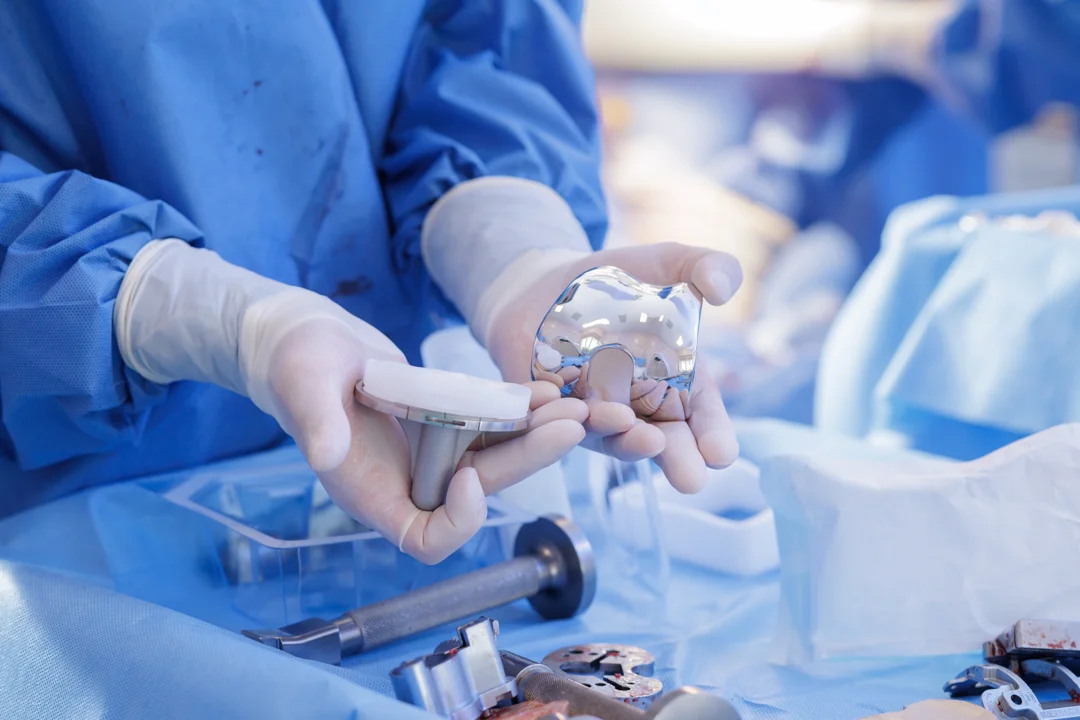
When a surgeon implants a titanium plate to reconstruct a patient’s skull, or seats a spinal cage designed around a specific patient’s vertebral anatomy, the difference between a component that fits and one that doesn’t is measured in fractions of a millimeter. That difference can determine whether a patient recovers fully, requires revision surgery, or faces long-term complications.
Healthcare is undergoing a fundamental shift. The one-size-fits-all treatment model that defined medical device manufacturing for decades is giving way to something more precise, more patient-centered, and more demanding: personalized medicine. At the heart of this transformation, enabling engineers, surgeons, and medical OEMs to turn individualized anatomical data into reliable, life-ready components, is medical CNC milling and machining.
This article explores how CNC milling and machining is powering the next generation of custom implants and patient-specific devices, what it takes to machine medical-grade components correctly, and what medical device manufacturers should look for in a precision manufacturing partner like Advanced Precision Machining (APM), a leading Colorado machine shop.
Why Standard Implants Are No Longer Enough
For most of modern medical history, implants were designed to fit the broadest possible patient population. A hip replacement came in small, medium, and large. A spinal cage was sized to fit most vertebral geometries. A cranial plate was bent intraoperatively to approximate the patient’s skull contour.
This approach worked to a point. But it carries inherent limitations that are increasingly difficult to ignore.
The core problem with standardized implants:
- Human anatomy varies significantly across patients. Bone geometry, joint proportions, spinal curvature, and cranial topology differ from person to person in ways that standard sizing can’t fully account for
- Standard implants require surgeons to adapt the patient to the device rather than the device to the patient, which can introduce compromise at every stage of a procedure
- Poorly fitted implants are associated with higher rates of micromotion, reduced osseointegration, accelerated wear, device loosening, and revision surgery
- As robotic surgery and digital surgical planning become standard, surgeons are working with anatomically precise data and they’re expecting manufacturing to match that precision
The medical device industry is responding. Advances in medical imaging, 3D anatomical modeling, and digital manufacturing workflows have made patient-specific implants not just feasible but increasingly expected in high-stakes clinical applications.
The fastest-growing custom implant segments include:
- Orthopedic joint reconstruction (hip, knee, shoulder)
- Spinal fixation and interbody fusion
- Cranial and maxillofacial reconstruction
- Dental implants and prosthetic components
- Trauma reconstruction hardware
- Patient-matched surgical guides
Medical OEMs that can support this level of customization, reliably, at scale, and within regulatory frameworks, have a significant competitive advantage. The manufacturers who serve them need to be equipped for the same.
How CNC Milling and Machining Enables Patient-Specific Device Manufacturing
Medical CNC milling and machining isn’t simply a fabrication process. When it’s applied correctly, with the right equipment, the right expertise, and the right quality systems behind it, it’s one of the most capable and versatile manufacturing technologies available for producing custom, patient-specific medical components.
Here’s why CNC milling and machining is uniquely suited to this challenge.
Micron-Level Dimensional Accuracy
In medical components manufacturing, precision isn’t a differentiator. It’s a baseline requirement CNC milling and machining routinely achieves tolerances of +/- 0.001 inches or tighter, ensuring that a machined implant matches its design specification with a level of accuracy that manual or conventional manufacturing methods can’t consistently deliver.
For patient-specific devices, this matters enormously. An implant designed around a CT-derived anatomical model is only as useful as the manufacturing process’s ability to reproduce that geometry faithfully.
Complex Geometry Capability
Patient anatomy is organic and irregular. Bone surfaces curve, taper, and contour in ways that are difficult to reproduce with simple toolpaths. Modern multi-axis CNC milling and machining, including 5-axis configurations, enables:
- Contoured surfaces that mirror patient bone geometry
- Internal channels, through-holes, and undercut features in a single setup
- Threaded features, porous surface textures, and fine detail work on implant surfaces
- Reduced fixturing errors compared to multi-setup conventional machining
Repeatability Without Compromise
One of the most important properties of CNC milling and machining for medical device machining is repeatability. Whether a manufacturer’s producing a single custom implant or a controlled production batch, CNC processes ensure the 100th part matches the first to the same dimensional specification. This consistency is non-negotiable in regulated medical environments where traceability and batch integrity are mandatory.
Design Flexibility and Short-Run Capability
Unlike casting, forging, or injection molding, which require expensive tooling changes to accommodate design iterations, CNC milling and machining allows engineers to update a CAD file and begin producing revised components almost immediately. This makes CNC ideal for:
- Prototype development and early-stage design validation
- Small-batch custom implant production
- Rapid iteration in response to surgeon or clinical feedback
- One-off patient-specific devices for complex reconstructive cases
Seamless CAD-to-Component Translation
CNC milling and machining fits naturally into digitally driven manufacturing workflows. A finalized CAD design translates directly into CAM toolpaths, which drive the machining process with no loss of dimensional intent between the digital model and the physical part. Customization doesn’t mean sacrificing consistency or reliability. It means manufacturing that’s precise enough to honor both simultaneously.
Tolerances That Patient Safety Demands
Tight tolerances in medical milling and machining aren’t an engineering preference, they’re a patient safety requirement. Consider that:
- An orthopedic implant with excessive dimensional variance may not seat correctly within the joint, creating micromotion that prevents bone ingrowth and accelerates wear
- A spinal cage that deviates from its specified height by even a fraction of a millimeter can alter load distribution across adjacent vertebrae
- A cranial plate that doesn’t conform precisely to a patient’s skull geometry may require intraoperative modification, increasing surgical time and risk
CNC milling and machining for the medical industry is held to these standards because the consequences of dimensional failure are clinical, not just mechanical.
Multi-Axis Machining and Complex Anatomical Geometries
Traceability is a cornerstone of compliance in medical manufacturing. At APM, we ensure meticulous documentation and record-keeping at every stage. Here’s what our process looks like:
- Material Traceability:
- Every material lot is assigned a unique identifier.
- Each part can be traced back to its raw material source.
- Production and Inspection Records:
- Batch numbers link each component to its production run and inspection data.
- Operator records are maintained for accountability.
- Digital Record-Keeping:
- All records are digitally stored for rapid retrieval.
- Supports compliance with ISO 13485, FDA 21 CFR Part 820, and other standards.
- Audit-Ready Documentation:
- Certificates of compliance, inspection reports, and calibration records are always available.
- Our documentation stands up to the most rigorous audits, providing complete transparency.
If a question ever arises, whether from a client, auditor, or regulatory agency, we can provide comprehensive, transparent records in minutes.
Digital Workflows: From Patient Scan to Finished Implant
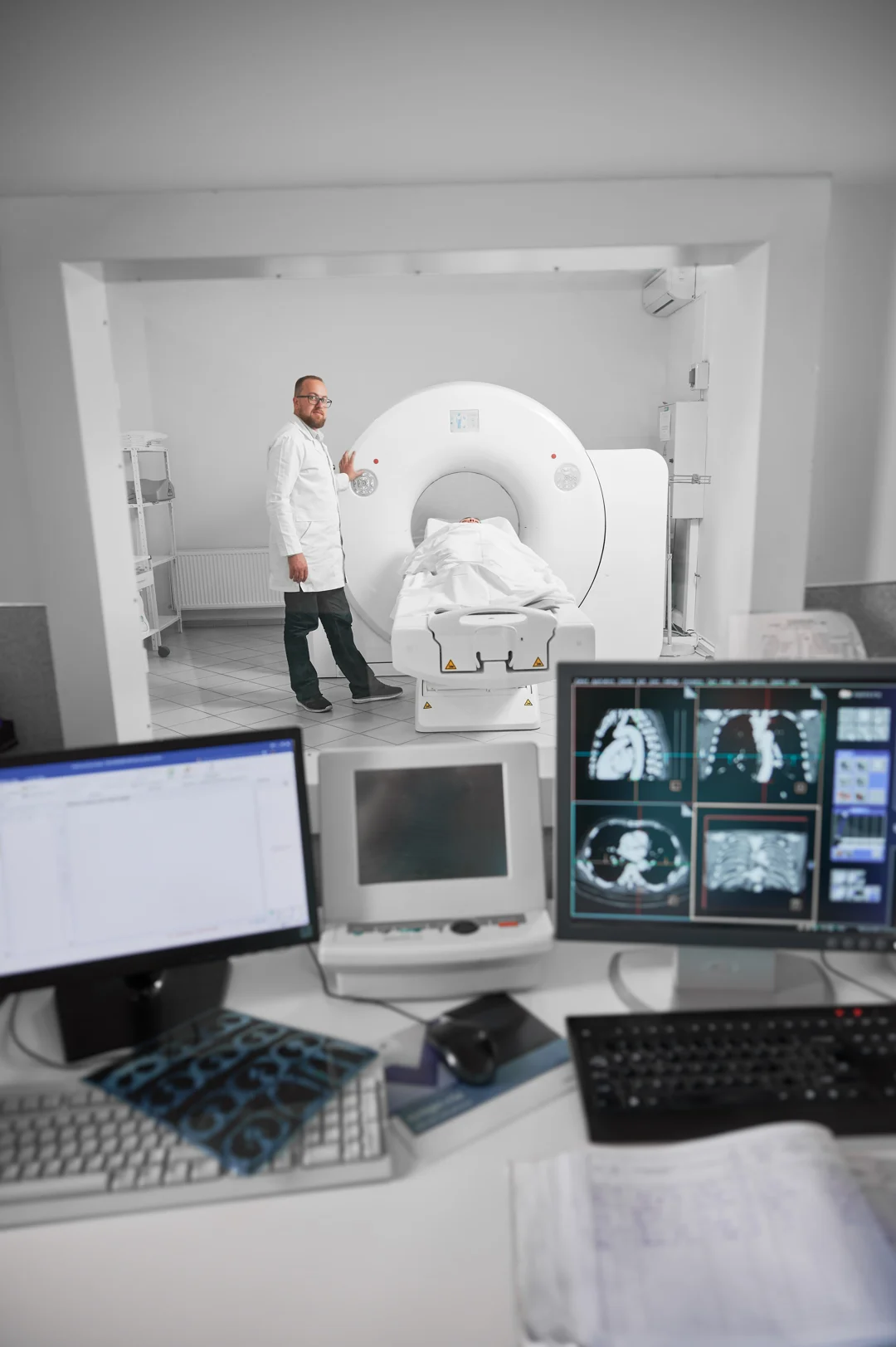
One of the most significant developments in modern medical components manufacturing is the integration of patient imaging data directly into the manufacturing workflow. This digital thread, running from CT or MRI scan through CAD modeling and CAM programming to a finished machined component, is transforming both the speed and the precision of patient-specific device production.
How the digital manufacturing workflow unfolds:
- Patient imaging: CT or MRI scans generate precise three-dimensional anatomical datasets
- Segmentation and modeling: Imaging data is processed into a patient-specific CAD model representing the target anatomy
- Implant design: Engineers design the implant or device geometry around the patient’s anatomy within the CAD environment
- DFM review: The manufacturing partner reviews the design for manufacturability, flagging features that may require process adjustments
- CAM programming: The approved CAD model is translated into machining toolpaths
- CNC milling and machining: The component is produced to the specified geometry and tolerance
- Inspection and validation: The finished part is measured against the design specification using precision metrology equipment
- Documentation Full traceability records are generated, linking the finished component back to the original patient data and production parameters
This workflow compresses development timelines, reduces the risk of interpretation errors, and produces a complete digital audit trail from design intent to delivered component. That’s a requirement in regulated medical manufacturing environments.
CAD/CAM Integration in Medical Manufacturing
For medical OEM engineering teams and product development leaders, the ability to work with a machining partner that’s fluent in CAD/CAM collaboration is a significant operational advantage. Rather than translating design intent through manual processes, APM’s team works directly with engineers on file review, design for manufacturability feedback, and toolpath optimization, shortening the path from approved design to precision-machined medical machined parts.
Types of Custom Implants and Patient-Specific Devices CNC Can Produce
Medical CNC milling and machining spans a wide range of device categories and clinical applications. The breadth of what CNC can produce, accurately, repeatedly, and in compliance with medical manufacturing requirements, is one of its defining strengths as a platform for patient-specific medical parts machining.
Orthopedic Implants
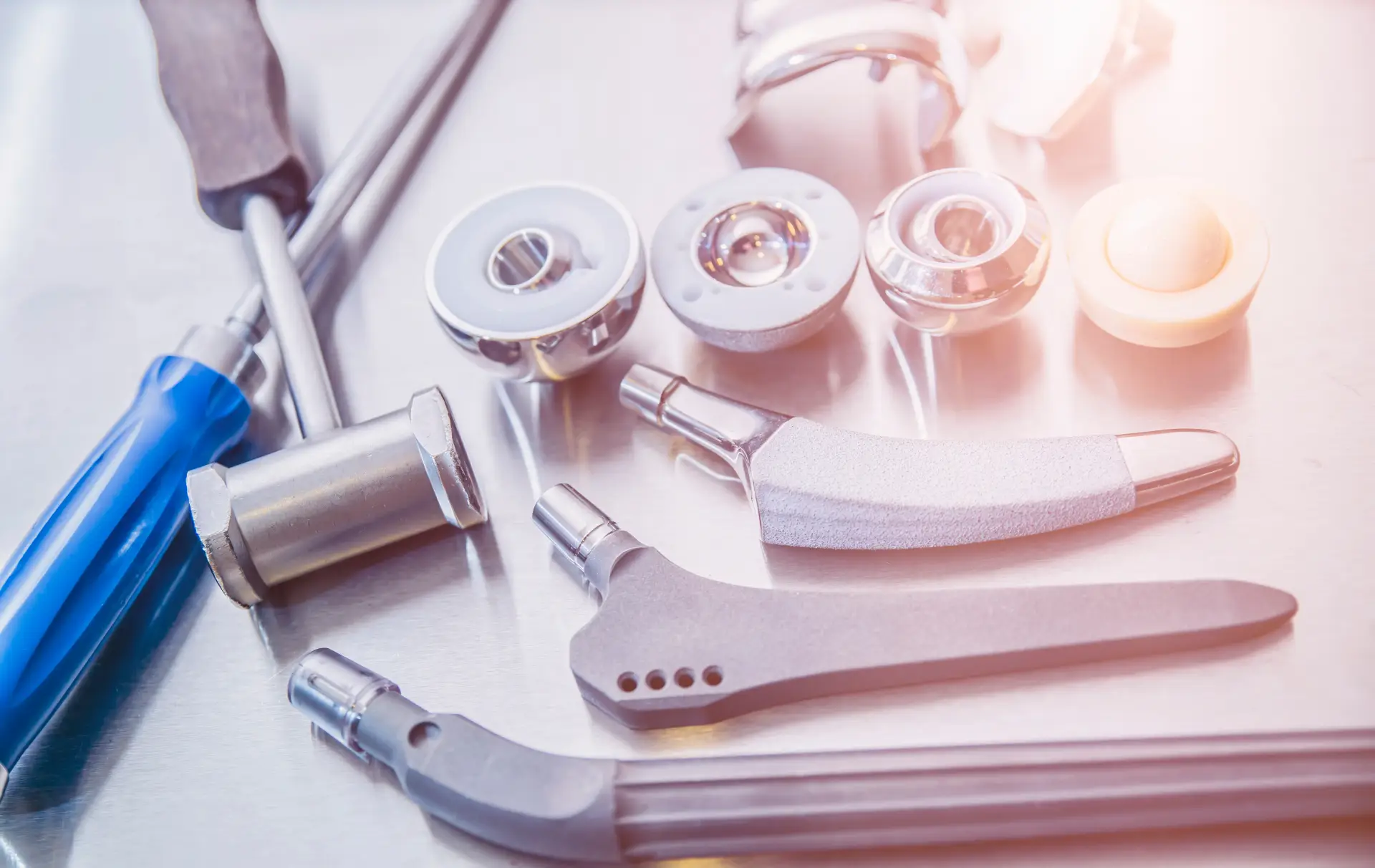
Orthopedic components represent some of the most demanding applications in medical components manufacturing. Hip, knee, and shoulder implants must withstand years of cyclical loading while maintaining precise dimensional relationships with surrounding bone and soft tissue. Patient-matched orthopedic implants and surgical cutting guides, designed from the patient’s own imaging data, improve surgical accuracy and can reduce operative time significantly.
Key machining requirements: tight tolerances on articular surfaces, precise taper geometry on stem components, controlled surface finish for osseointegration or articulation zones.
Spinal Fixation Hardware
Spinal surgery relies heavily on machined medical components including pedicle screws, connecting rods, interbody fusion cages, and patient-specific spinal plates. These components must combine mechanical strength with biocompatibility, and they’ve got to fit precisely within a surgical environment where access is limited and margins for error are narrow.
Key machining requirements: complex thread profiles, precise cage geometry, controlled surface texture to promote bone fusion.
Cranial and Maxillofacial Plates
Cranial and maxillofacial reconstruction represents one of the clearest examples of patient-specific manufacturing. Plates designed directly from a patient’s CT scan geometry conform to their unique skull topology, eliminating intraoperative bending, reducing surgical time, and improving cosmetic and functional outcomes.
Key machining requirements: thin-wall titanium machining, precise hole placement for screw fixation, smooth contoured surfaces.
Dental Implants and Abutments
Dental implant components require exceptional surface finish and dimensional accuracy to support osseointegration and ensure proper occlusal fit. CNC milling and machining supports the short-run, patient-specific production model that characterizes dental device manufacturing, where volume varies and precision is constant.
Key machining requirements: fine surface finish on implant body, precise abutment geometry, tight tolerances on connection interfaces.
Trauma Reconstruction Hardware
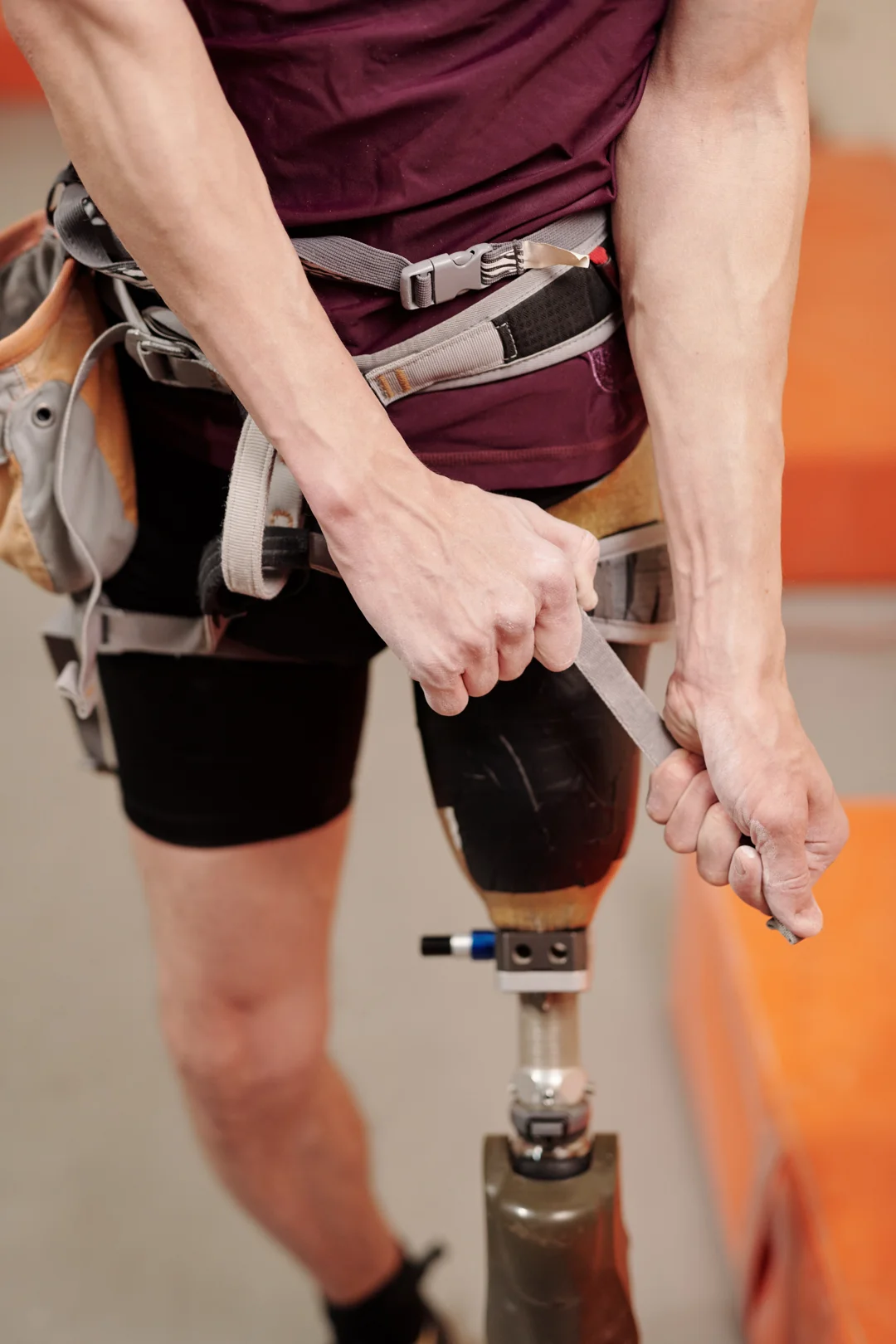
Trauma cases often demand custom machined medical components on compressed timelines. Plates, screws, and fixation systems designed for complex fracture patterns may require patient-specific geometry that standard trauma sets can’t accommodate. CNC milling and machining supports both the customization and the speed that trauma reconstruction requires.
Surgical Guides and Instrument Components
Patient-specific surgical guides, used in joint replacement, spinal surgery, and tumor resection, improve procedural accuracy by giving surgeons a physical reference aligned to the patient’s exact anatomy. These components must meet precise dimensional specifications and they’re increasingly integrated with robotic surgery platforms.
Diagnostic and Scientific Instrument Components
Beyond implants, medical parts milling and machining extends into the equipment that surrounds patient care. Housings, brackets, optical mounts, and precision assemblies for MRI, CT, and laboratory systems all require the consistency and dimensional control that CNC milling and machining provides. This is an area where APM’s scientific instrument machining capabilities directly support medical device innovation.
Material Expertise: What It Takes to Machine Medical-Grade Components
Not every machine shop is equipped, technically or experientially, to machine the materials that patient-facing medical components demand. Medical-grade materials are often among the most challenging to work with in precision manufacturing. Selecting the right material is only the beginning. Machining it correctly, consistently, and with full traceability requires specialized knowledge that general-purpose shops frequently lack.
This is one of the most important differentiators in medical CNC milling and machining. Equipment matters. Expertise matters more.
Key Materials in Custom Medical Implant Manufacturing
Titanium (Ti-6Al-4V): The most widely used material for load-bearing implants and cranial reconstruction. Titanium’s combination of high strength, low density, excellent corrosion resistance, and proven osseointegration properties makes it the material of choice for orthopedic, spinal, and cranial applications. It’s also notoriously difficult to machine, prone to work hardening, heat buildup, and tool wear, requiring controlled cutting parameters and significant process expertise.
PEEK (Polyether Ether Ketone): An advanced engineering polymer increasingly used in spinal interbody cages, trauma implants, and craniofacial applications. PEEK is radiolucent, biocompatible, and it exhibits a modulus of elasticity close to cortical bone, reducing stress shielding. Machining PEEK to implant-grade specifications requires precise control of cutting speeds and chip evacuation to maintain surface integrity.
Cobalt-Chrome Alloys: The standard material for articulating surfaces in hip and knee replacements, cobalt-chrome offers exceptional hardness, wear resistance, and corrosion resistance. Its hardness makes it one of the more demanding materials in medical device machining, requiring robust tooling strategies and careful process control.
Medical-Grade Stainless Steel (316L): A cost-effective and versatile option for trauma hardware, surgical instruments, and orthopedic fixation components. 316L stainless offers good corrosion resistance and biocompatibility, and it’s generally more accessible to machine than titanium or cobalt-chrome, making it common in high-volume trauma and instrument applications.
Medical-Grade Aluminum: Used selectively in diagnostic equipment housings, instrument components, and non-implant medical device structures where weight reduction and machinability are priorities over implant-grade biocompatibility requirements.
Why Material Expertise Is Non-Negotiable
Beyond typical milling and machining challenges, medical-grade materials carry documentation requirements that are as important as the physical properties themselves:
- Every raw material must arrive with certified mill certifications confirming composition and mechanical properties
- Lot numbers must be traceable from the raw stock through every production step to the finished component
- Surface finish specifications must be met and verified. A surface that’s too rough can harbor bacteria, impede sterilization, or disrupt tissue integration
- Material substitutions, even seemingly minor ones, aren’t permissible without engineering review in a regulated medical manufacturing environment
Quality, Traceability, and Regulatory Alignment
Precision milling and machining capability is necessary but not sufficient for medical components manufacturing. The quality systems, inspection and reporting processes, and documentation practices surrounding the machining operation are equally critical and they’re often the deciding factor when medical OEMs are evaluating manufacturing partners.
A machine shop that can hold tight tolerances but can’t document them consistently, traceably, and repeatedly isn’t a viable partner for regulated medical device production.
What rigorous medical manufacturing quality looks like in practice:
- Documented quality management system (QMS): A structured, auditable framework governing every aspect of production, from incoming material inspection through final shipment
- In-process inspection: Dimensional checks at critical stages of machining, not just at the end of the process
- Final inspection with precision metrology: CMM measurement, surface profilometry, and other metrology tools to verify that finished components meet every dimensional requirement
- Material traceability: Full chain of custody from certified raw stock to finished part, with lot documentation maintained and retrievable
- Production records: Tooling logs, machine settings, operator records, and inspection data maintained for each production batch
- First article inspection (FAI): Rigorous dimensional and process verification before committing to production quantities
- Non-conformance management: Documented processes for identifying, quarantining, and dispositioning out-of-tolerance or suspect components
What Medical OEMs Should Look for in a Manufacturing Partner
When qualifying a CNC milling and machining partner for medical components manufacturing, engineering and procurement teams should evaluate:
- ISO 9001 certification or equivalent quality management credentials
- Demonstrated experience machining the specific materials and geometries required
- Precision inspection capabilities matched to the tolerance requirements of the application
- A collaborative approach to DFM review. Partners who flag producibility issues early save time and cost downstream
- Transparent, detailed quoting that reflects a genuine understanding of the work
- References or track record in medical or similarly regulated industries
Advanced Precision Machining’s ISO 9001 certification and ITAR registration reflect a quality and compliance infrastructure aligned with what medical device manufacturers require from a precision medical manufacturing partner.
Frequently Asked Questions: CNC Milling and Machining for Custom Medical Implants and Patient-Specific Devices
- What is medical CNC milling and machining and how is it used to produce custom implants?
- What materials are commonly used in medical CNC milling and machining for implants and patient-specific devices?
- What tolerances are required for medical device milling and machining, and why do they matter for patient safety?
- How does CNC milling and machining support patient-specific medical device production compared to standard manufacturing methods?
- What quality certifications and standards should a medical CNC machining partner have?
Medical CNC milling and machining is a computer-controlled precision manufacturing process used to produce implants, surgical instruments, and other medical device components from metal, polymer, and composite materials. In custom implant production, CNC milling and machining translates a patient-specific CAD model, often derived from CT or MRI imaging data, into a finished component machined to tight dimensional tolerances. The process handles complex anatomical geometries with micron-level accuracy, making it a primary manufacturing technology for orthopedic implants, spinal hardware, cranial plates, dental components, and trauma reconstruction devices.
The most widely used materials include:
- Titanium (Ti-6Al-4V): Preferred for load-bearing implants and cranial reconstruction due to its strength, corrosion resistance, and osseointegration properties
- PEEK: A radiolucent, biocompatible polymer used in spinal cages and craniofacial applications, valued for its bone-like stiffness
- Cobalt-Chrome Alloys: Standard in hip and knee components for hardness and wear resistance
- Medical-Grade Stainless Steel (316L): Common in trauma hardware and surgical instruments
- Medical-Grade Aluminum: Used in diagnostic equipment housings and non-implant device structures
Each material presents unique milling and machining challenges that require specialized process knowledge and experience with medical-grade stock.
Medical device milling and machining typically requires tolerances of +/- 0.001 inches or tighter depending on the component and its clinical application. For patient-facing implants, dimensional accuracy is directly tied to safety and performance. An orthopedic implant with excessive variance may not seat correctly, creating micromotion that prevents bone ingrowth. A spinal cage that deviates from its specified height, even fractionally, can alter vertebral load distribution. Tight tolerances in medical machining aren’t just an engineering preference. They’re a patient safety requirement, enforced through precision inspection, CMM measurement, and documented quality systems.
CNC milling and machining supports patient-specific production in ways standard methods can’t match:
- Design flexibility: CAD updates translate immediately into revised components with no new tooling required
- Short-run capability: CNC economically supports single-unit and small-batch production, which is the norm for patient-specific devices
- CAD/CAM integration: Patient imaging data flows directly from anatomical model to machining toolpath, preserving design intent
- Complex geometry: Multi-axis CNC machines contoured, patient-specific surfaces in a single setup, reducing fixturing errors
- Traceability: CNC environments generate the material certifications, inspection records, and production logs that regulated medical manufacturing requires
When qualifying a medical CNC milling and machining partner, here’s what to look for:
- ISO 9001 certification: Confirms documented, auditable, and repeatable production processes
- ITAR registration: A strong indicator of compliance rigor in regulated manufacturing environments
- Material traceability systems: Full chain of custody from certified raw stock to finished component
- Precision inspection infrastructure: CMM capability, surface profilometry, and first article inspection (FAI) processes
- DFM review capability: A partner who engages proactively on design for manufacturability adds value well beyond the purchase order
ISO 13485, the medical device-specific quality management standard, is an additional credential worth asking about, though ISO 9001 combined with strong medical manufacturing experience is the common baseline expectation among medical OEMs.
From Prototype to Production: CNC’s Role Across the Full Medical Device Lifecycle
One of the persistent misconceptions about CNC milling and machining is that it’s best suited for medium-to-high volume production runs. In reality, CNC is one of the most scalable manufacturing technologies available. It’s equally capable of producing a single patient-specific implant and a controlled batch of production components, with no fundamental process change between them.
This scalability is particularly valuable in medical device development, where the path from concept to cleared device involves multiple distinct phases, each with different manufacturing requirements.
CNC machining’s role at each stage of the medical device development lifecycle:
- Concept and feasibility: Early prototypes machined from design files allow engineering teams to evaluate form, fit, and function before committing to design freeze
- Design iteration: CAD updates translate directly into revised machined prototypes without tooling costs or lead time penalties, accelerating the development cycle
- First article and design validation: Production-intent components machined to final specifications, with full inspection documentation for design verification and validation activities
- Regulatory submission support: Dimensional and process data generated during machining supports 510(k) submissions and other regulatory filings
- Low-volume production: For patient-specific or small-population devices, CNC supports economical low-volume runs without the overhead of high-volume tooling
- Scale-up: As device volumes grow, CNC processes scale with them, maintaining dimensional consistency across increasing batch sizes
CNC and Additive Manufacturing: Complementary, Not Competing
3D printing and additive manufacturing have expanded what’s possible in medical device prototyping and certain implant applications. But additive processes have inherent limitations in surface finish quality, dimensional accuracy on critical features, and material performance for load-bearing applications.
CNC milling and machining and additive manufacturing are most powerful when they’re used together. Additive works well for complex internal geometries and rapid early-stage forms, while CNC handles final surface finishing, tight-tolerance features, and production-grade component integrity. Advanced Precision Machining’s 3D printing capabilities, combined with precision CNC milling and machining, support this integrated approach for medical device development teams.
Why Advanced Precision Machining Is Colorado’s Precision Partner for Custom Medical Manufacturing
Medical device manufacturers across Colorado’s Front Range, from Boulder and Denver to Fort Collins and beyond, need more than a capable machine shop. They need a manufacturing partner who understands the clinical stakes of the work, operates within appropriate quality and compliance frameworks, and brings the technical depth to handle complex, custom, high-consequence components.
Advanced Precision Machining, based in Longmont, Colorado, has spent nearly two decades building exactly that kind of capability.

What sets APM apart as a medical CNC machining partner:
- ISO 9001 certified and ITAR-registered: Quality and compliance credentials that satisfy medical OEM supplier qualification requirements
- Advanced multi-axis CNC equipment: Enabling complex geometries, tight tolerances, and multi-material production across implant and device categories
- Deep materials expertise: Proven experience machining titanium, PEEK, cobalt-chrome, stainless steel, and other medical-grade materials to implant-level specifications
- Precision inspection infrastructure: CMM measurement, surface analysis, and comprehensive inspection documentation for every production run
- Collaborative engineering partnership: APM’s team works directly with engineering and product development teams on DFM review, design optimization, and first article planning
- Full lifecycle capability: From prototype through production, APM supports medical device development at every phase
- Local Front Range presence: Serving Boulder, Denver, Fort Collins, and surrounding Colorado medical device manufacturers with responsive, relationship-driven manufacturing support
For medical device manufacturers evaluating CNC machining partners, the question isn’t simply whether a shop can make the part. It’s whether they can make it to specification, document it completely, deliver it reliably, and scale with your program as it evolves.
Explore APM’s full medical CNC milling and machining capabilities and advanced CNC machine shop services to learn more about how we support medical device innovation across Colorado and the broader medical manufacturing sector.
Conclusion
Personalized medicine isn’t a future trend, it’s the direction the entire healthcare industry is moving. And as clinical expectations for patient-specific implants and devices continue to rise, the manufacturing infrastructure supporting those expectations must rise with them.
Medical CNC milling and machining, when executed with the right expertise, equipment, and quality systems, is one of the technologies making that possible. From the digital thread connecting patient imaging to a finished component, to the material knowledge required to machine titanium and PEEK to implant-grade specifications, to the traceability and documentation that regulated medical environments demand, precision CNC milling and machining is the connective tissue between innovative medical design and reliable, patient-ready manufacturing.
Advanced Precision Machining is ready to support your next custom implant, patient-specific device, or medical component manufacturing program.
Ready to discuss your project? Contact APM to request a consultation or quote and experience the precision, reliability, and partnership that Colorado’s medical device manufacturers depend on.
by Gerry Dillon
Gerry Dillon is a co-founder, current owner and certified CNC machinist at Advanced Precision Machining (APM), a full-service machine shop located in Longmont, Colorado. Gerry has over 30 years of precision milling and machining experience under his belt.