
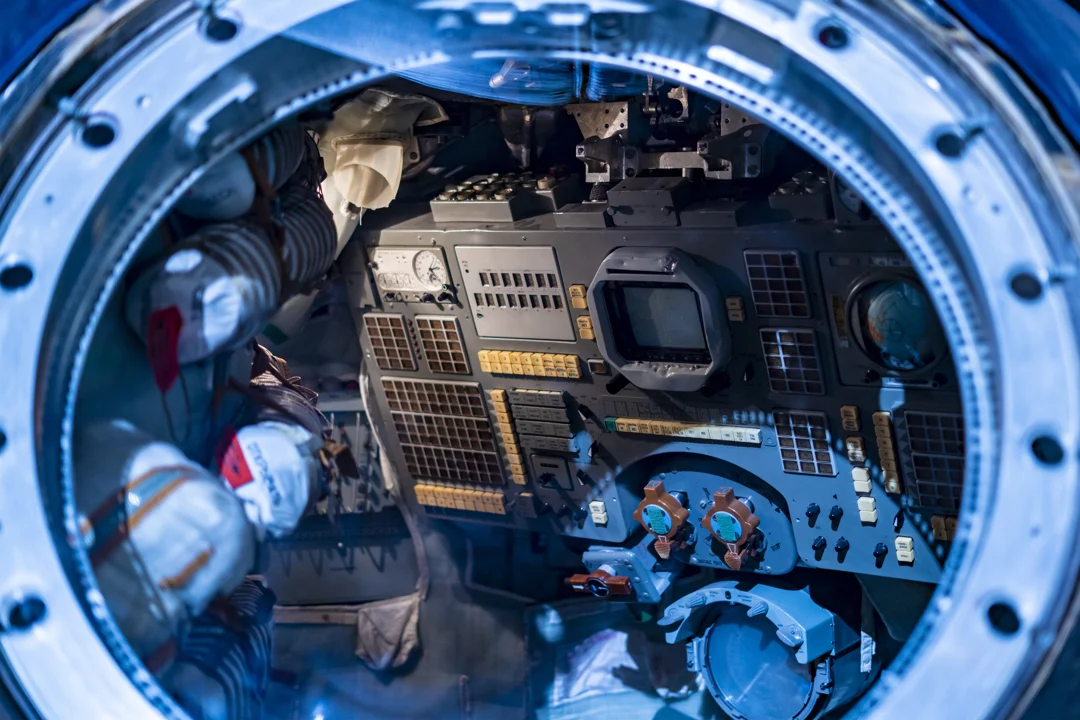
In the world of science, the tiniest details can make the biggest difference. A laser beam that’s off by the width of a human hair can invalidate months of research. A seal that isn’t perfect can ruin a delicate vacuum experiment. Ever stopped to think about what makes these incredible pieces of technology work with such mind-boggling precision?
A huge part of the answer is something called tolerance.
If you’re an engineer, designer, or project manager in the scientific field, you already know tolerances are important. But understanding them on a deeper level—and knowing how to specify them correctly—is the secret sauce for a successful project. This guide is all about demystifying scientific machining tolerances. Here, our CNC machinists at Advanced Precision Machining (APM) will break down what they are, why they matter so much in scientific instrument machining, and how we work together to get them just right.
So, What Are We Actually Talking About? Understanding Tolerances
At its core, a tolerance is simply the acceptable amount of variation for a given dimension on a part. No manufacturing process is perfect, so tolerances define the “wiggle room.” But it gets a little more complex than that, because we’re not just talking about size.
Think of it like building with LEGOs. The little bumps have to be just the right size and in just the right spot for the bricks to snap together. Tolerances are the rules that ensure all the pieces of a complex scientific instrument fit and work together flawlessly.
Here are the main types you’ll encounter:
- Dimensional Tolerances: This is the one most people think of—the classic “plus or minus” value on a drawing that controls length, diameter, or width. It’s the most basic rule.
- Geometric Tolerances (GD&T): This is where the real magic happens. GD&T goes beyond size to control the form and location of features. It’s the difference between saying, “make this hole 10mm wide” and saying, “make this hole 10mm wide, perfectly round, perfectly straight, and exactly 25mm from that edge.” For complex assemblies, GD&T is non-negotiable.
- Surface Finish: This controls the smoothness of a part’s surface. Is it reflective like a mirror for an optical component? Or is it slightly rougher to hold a gasket for a perfect vacuum seal? That’s what surface finish tolerances define.
- Material-Specific Tolerances: Different materials behave differently. Choosing the right material for CNC Milling applications is critical. Some metals expand a lot with heat, while certain ceramics are incredibly stable. We have to account for these natural properties when setting our targets.
Let’s look at a few real-world examples from our work in scientific parts machining:
| Tolerance Type | Scientific Instrument Example | Why It’s a Game-Changer |
|---|---|---|
| Dimensional | The tiny aperture in a mass spectrometer. | If it’s even a few microns too big or too small, it throws off the sensor readings, compromising the entire experiment. |
| Geometric | The flatness of a mounting base for an optical system. | If the base isn’t perfectly flat, the mirrors and lenses won’t align, leading to distorted images and useless data. |
| Surface Finish | The polished surface of a sample holder in a microscope. | Any imperfection on the surface could be mistaken for a feature on the sample itself, making accurate analysis impossible. |
The Million-Dollar Question: How Tight Do Tolerances Need to Be?
It’s tempting to just slap the tightest possible tolerance on every feature on a drawing, right? It feels safer. We’ve all been there. But this is actually one of the most common and costly mistakes in precision CNC milling and machining. Over-tolerancing can drastically increase the cost and lead time of a part for no real-world benefit.
So, how do you find that “Goldilocks” zone? It’s a conversation, a partnership between your design team and your machining partner.
Here are the things we need to think about together…
- Function is King: What does this part actually do? The surfaces where parts mate or align need tight control. The outside of a protective cover? Not so much.
- The Big Picture (Assembly): How does this piece fit with everything else? The tolerances needed for a press-fit bearing are wildly different from those for a simple bracket.
- Material Matters: Choosing a stable material like Invar or a machinable ceramic can make holding tight tolerances much easier than trying to do it with a material that wants to warp and move.
- The Right Tool for the Job: Some processes, like precision grinding, can achieve incredible accuracy. Others, like standard milling, have different limits. We can help you design for a process that is both effective and cost-efficient.

This back-and-forth is often called Design for Manufacturability (DFM). Honestly, it’s just a fancy term for a common-sense sanity check. It’s our chance to look at your design and say, “Hey, if we adjust this one tolerance just a bit, we can make this part faster, cheaper, and just as effective.” We dive deeper into this collaborative process in our complete Scientific Instrument Machining Guide.
Here’ s a quick sanity check for your design…Before you send off that CAD file, ask yourself:
- Have I clearly marked the truly critical features?
- Can I loosen the tolerances on any non-critical surfaces to save cost?
- Will my material choice hold up under real-world conditions?
- Have I talked to my technical machining partner to make sure this is all realistic?
How We Actually Pull This Off: Achieving and Verifying Precision
Alright, so how do we take a drawing with tolerances measured in microns and turn it into a physical object you can hold in your hand? It’s a blend of incredible technology and old-fashioned expertise.
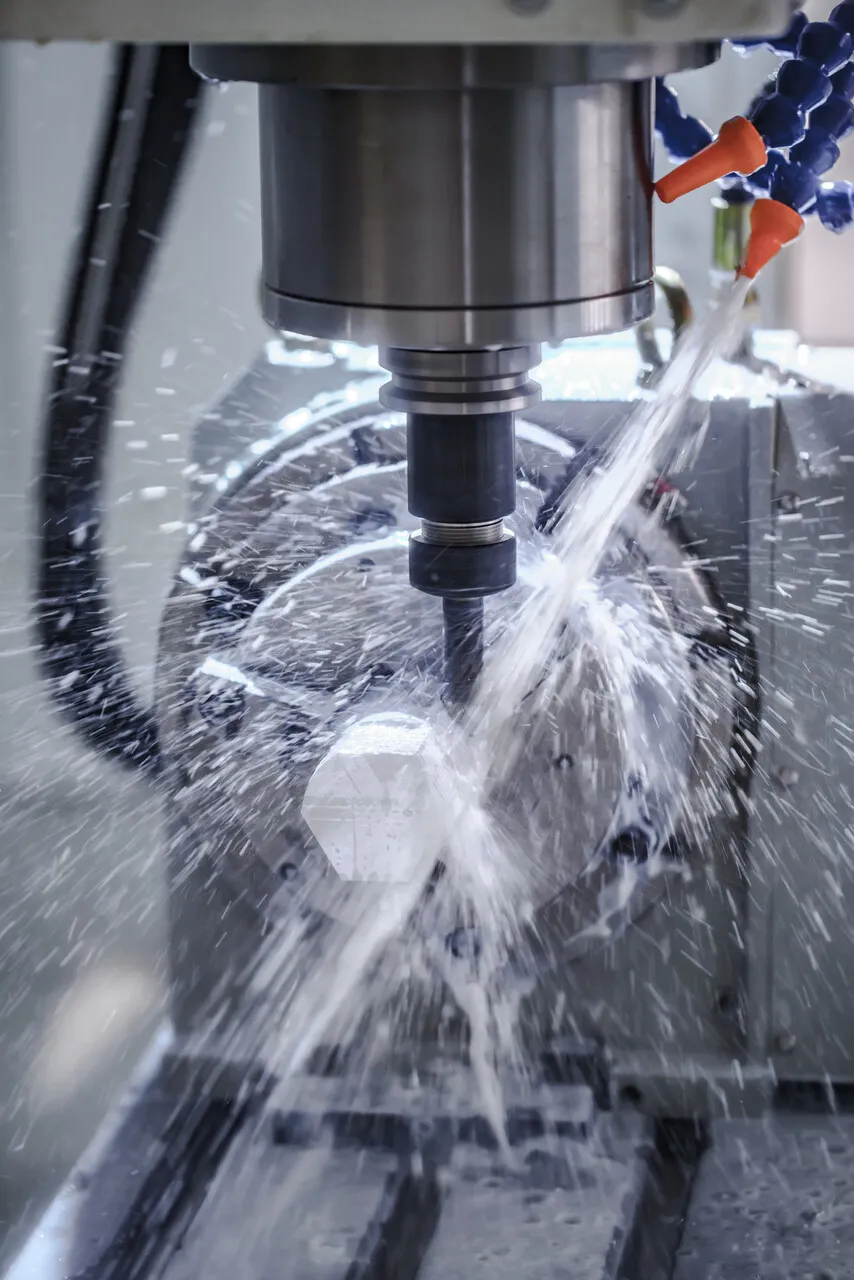
We use amazing machines: Our Colorado CNC machine shop is filled with multi-axis CNC machines that can carve out complex shapes in a single setup, minimizing the risk of error. For super intricate features or tough materials, we might use Electrical Discharge Machining (EDM), which uses a spark to precisely erode material away.
Here’s a little secret: Even the fanciest machine is just a hunk of metal without a skilled machinist at the helm. Our team has decades of experience. They know how a particular grade of titanium will behave, how to adjust for tool wear in the middle of a long job, and how to feel when something is just right. These intuitive tolerance best practices are what really separate good work from great work.
We don’t just guess, we verify: Our inspection reporting services utilize state-of-the-art Coordinate Measuring Machines (CMMs) that use a delicate probe to measure a part in 3D down to the micron, confirming every dimension against your original model. It’s the ultimate proof that what we made is exactly what you designed.
Navigating the Pitfalls: Common Challenges and How to Beat Them
In a perfect world, every project would go smoothly. But we all work in the real world, and sometimes things get tricky. Here are a few common hurdles we see and how we clear them:
Material Mood Swings:Choosing the right material for CNC Milling is critical. Different materials or new batches may machine just a little differently.
How We Fix It: We work with trusted material suppliers and always get certifications. For critical jobs, we’ll even run test cuts to dial in our process before machining the final part.
Things Get Heated (Literally): The friction from machining generates heat, which can make a part expand. If you measure it while it’s still warm, the dimensions will be off.
How We Fix It: Our shop is climate-controlled, and we use coolants to manage temperature. Crucially, we let every part stabilize to room temperature before it goes to our quality lab for final inspection.
Lost in Translation: An ambiguous note on a drawing can lead to a wrong assumption and a scrapped part.
How We Fix It: We believe in clear communication. If anything is unclear, we pick up the phone. A quick 10-minute chat can save weeks of headache and cost.
What’s Next? The Future of Insanely Tight Tolerances
This is the part that gets us really excited. As science pushes into new frontiers like quantum computing and nano-robotics, the demand for ultra high-precision CNC milling and machining is skyrocketing. We’re talking about holding tolerances at the nano scale.
We’re seeing incredible innovations on the horizon, like AI-driven systems that make real-time adjustments during machining and on-machine inspection tools that measure a part as it’s being made. It’s a fascinating field, and it’s all aimed at one thing: enabling the next wave of scientific discovery.
Let’s Bring It All Together
At the end of the day, tolerances aren’t just numbers on a drawing. They are the language of precision. They are the agreement between the designer’s vision and the manufacturer’s execution that ensures a component will perform its critical function flawlessly.
Getting it right takes more than just reliable machining tools; it takes partnership, experience, and a shared commitment to excellence. As a leading Colorado machine shop and precision manufacturing partner, we thrive on these challenges!
Have a complex scientific instrument machining project on your mind, or just want to chat about how we can make your design a reality? Contact Advanced Precision Machining today…We’d love to hear about it!
You can learn more about our specific capabilities related to scientific parts machining by checking out our “Scientific Instrument Machining Guide”, or just give us a call at 303-776-1910. We’d love to hear about what you’re working on!
by Gerry Dillon
Gerry Dillon is a co-founder, current owner and certified CNC machinist at Advanced Precision Machining (APM), a full-service machine shop located in Longmont, Colorado. Gerry has over 30 years of precision milling and machining experience under his belt.